

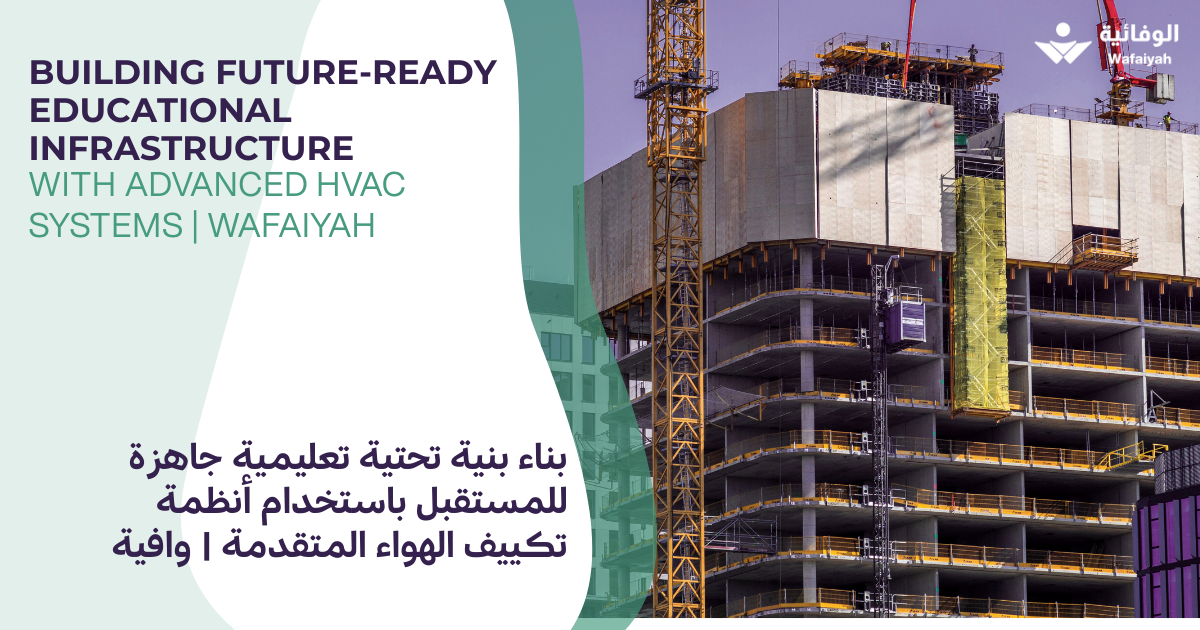
Over the decades, educational infrastructure has evolved from simple classrooms to dynamic learning environments that support student growth and well-being. Today, physical spaces play a crucial role in enhancing performance, comfort, and engagement. Modern schools and campuses increasingly embrace sustainability, technology, and resilient design, with efficient HVAC systems becoming central to creating safe, future-ready learning spaces. Wafaiyah stands as a trusted partner, delivering advanced solutions tailored to the unique needs of educational institutions.
Nowadays, education is changing more rapidly than ever. Thus, it needs a matching infrastructure to cover the present requirements and future expectations. The modern classrooms, laboratories and common rooms need to accommodate technology-based learning besides being comfortable and safe for both the students and the staff. This is because future-ready educational infrastructure also focuses on flexibility, energy management and resiliency.
Schools and colleges need to swiftly adjust to new teaching and learning practices and student requirements. The use of sustainable design, smart systems, and building management does not only make the learning experience better but it will also lead to lower costs of operation. In the future, educational facilities will be more effective, secure, and motivating to those who will come after us.
HVAC Systems in Education
HVAC systems are also important components in educational settings. They keep the indoors comfortable, control the temperature, and guarantee the right air quality to the students and employees. An effective system will minimize the amount of energy used and ensure that there is a conducive and healthy environment to learn in. The correct airflow and temperature maintain concentration, a decrease in absenteeism and the general well-being.
These systems are also used in schools and colleges to avoid the spread of airborne diseases due to the clean and filtered air. Their awareness helps the administrators to make right decisions regarding upgrades, maintenance, and energy performance to provide safe and productive learning environments.
Advanced HVAC Technologies Transforming Educational Spaces
New technologies in the HVAC are transforming how educational institutions control comfort and air quality. The improved smart systems have made it possible to monitor the temperature, humidity and air circulation in real time to maintain a consistent and healthy learning environment. The low-energy solutions, e.g. variable air volume system, heat recovery unit, help to reduce the costs of operation and impact on the environment.
Rapid air purification and filtration implement technology improves the quality of the indoor air. It also shields the students and staff against air pollutants and allergens. The building management systems allow integration with building management. It also helps predictive maintenance to reduce the downtime and prolong the life of the equipment. With these innovative systems, learning environments will become more versatile and sustainable. It will create an ideal learning experience, which contributes to academic performance and health.
Key Features of Wafaiyah HVAC Systems for Schools
Custom Classroom Solutions
Wafaiyah systems are geared towards classrooms, labs and auditoriums. All spaces have optimized air flow, temperature, and energy efficiency so that students and teachers enjoy their stay in the room irrespective of the room size or design.
Advanced Air Filtration
Quality filters eliminate air pollution, dust and pollen and limit allergies and respiratory risks. Healthy and safer learning environments are facilitated by cleaner air. This helps the students to pay more attention to what they learn as well as to contribute to their general health.
Control of Temperature and Humidity
Strict climate control maintains the classrooms at comfortable temperatures by avoiding the chances of heat, cold, or dampness. The constant temperature/humidity will enhance concentration, minimize fatigue, and facilitate the best learning conditions.
Quiet Operation
The noise-reduction technology provides the least amount of disruption in the classroom, libraries, and auditoriums. HVAC equipment does not distract students because it helps them to focus on their tasks, teachers can easily communicate, and the learning process continues.
Durable and Low Maintenance
The wafaiyah systems are constructed to be very reliable and have components that are easy to maintain. In schools, this helps in reducing operation costs. There are fewer interruptions and consistent performance over the years thereby making climate control sustainable.
Designing HVAC Systems for Different Educational Spaces
These systems in educational areas should be focused on requirements. The classrooms require a balance between ventilating, comfortable, and energy saving to facilitate learning. Libraries and study rooms should have clean air and quiet systems to keep the mind focused. Workshops and laboratories need special ventilation that is safe and allows the control of temperature.
Sports halls and auditoriums should take substantial amounts of air and ensure the comfort of occupants. Natural ventilation is advantageous because it is augmented by HVAC in outdoor and hybrid learning spaces. Considerable design guarantees comfort, safety and efficiency in any learning environment.
Energy Performance and Sustainability in Educational HVAC Systems
Less energy use in schools will be necessary to save on expenses and environmental accountability. Advanced systems also contribute towards receiving such sustainability accolades as LEED and BREEAM. Green solutions that save energy reduce the utility costs and lessen the carbon footprint of the school. Use of renewable sources of energy, such as solar energy or geothermal energy, when integrated with the systems improves sustainability.
Effective functioning prolongs the equipment life and saves on maintenance expenses. Educational institutions put up more healthy environments through energy efficiency and a focus on environmental impact, which also contributes to the greater climate objectives.
Quick Ways for Smart Maintenance and Monitoring
Regular System Inspections
Perform regular checkup to detect wear, leakages or blockage in time. It keeps the minor problems at minimum to keep the costs low since they can be checked periodically. This also helps the filters, fans and ducts to maintain consistent performance, energy efficiency and a safe and comfortable learning environment.
Smart Sensing and Control
Real-time temperature, humidity, and air quality sensors. HVAC and related systems can be automated to adapt to environmental and occupancy changes to save on wastage of energy, keep the environment comfortable, and provide predictive maintenance information.
Predictive Scheduling of Maintenance
Use monitoring tools data to predict equipment failures before they happen. Planned maintenance is done beforehand and eliminates unforeseeable downtime and equipment wear and tear. It also reduces the costs of repair so that classes, laboratories, and meeting areas are not negatively affected.
Remote Monitoring and Notifications
Install remote monitoring software which would give notifications of unusual trends or system failures. Timely alerts enable facility managers to act in time, reduce interruptions and enhance safety and optimal indoor environments in learning environments.
Filter and Component Upkeep
Keep up with cleaning or replacing filters, belts and coils on a regular basis. Efficient component management maintains optimal airflow and cooling performance, enhances indoor air quality, and eliminates energy waste, decreases total operating expenses and extends system life.
Future Trends in Educational HVAC Systems Beyond 2025
The current educational systems are developing into smarter, more sustainable and adaptive. It can be integrated with AI-based building management systems that will allow real-time optimization of energy consumption and indoor comfort. The climate-responsive designs adapt to changes in the environment on a seasonal and daily basis, which improves efficiency. Solar-assisted system is a renewable energy-based system that lowers the carbon footprints in learning institutions.
The spread of IoT devices, smart sensors, and data analytics provide accurate temperature and air quality monitoring and occupancy patterns, creating the best conditions. Moreover, the designs of HVAC are becoming more accommodating in terms of hybrid learning and flexible classroom setups. This ensures comfort throughout and allows to facilitate dynamic learning environments and favor healthier and more productive learning conditions.
Conclusion
Advanced HVAC systems are key to creating safe, comfortable, and future-ready educational spaces. Investing in modern infrastructure supports student success, well-being, and sustainability. Partnering with Wafaiyah ensures long-term value, reliable performance, and innovative solutions that help schools and campuses thrive for generations to come.
Frequently Asked Questions
Why are advanced HVAC systems important in schools?
They ensure clean air, comfortable temperatures, improved focus, student health, and energy performance across all classrooms.
What makes educational infrastructure future-ready?
Integration of smart system, sustainable design, scalability, and compliance ensures adaptable, efficient, and resilient learning environments for long-term needs.
How do modern HVAC systems save energy?
Using efficient equipment, smart controls, and demand-based ventilation reduce energy consumption, operational costs, and environmental impact.
How do smart systems help campus management?
They provide real-time monitoring, predictive maintenance, energy optimization, reduced downtime, and improved reliability across school buildings.