

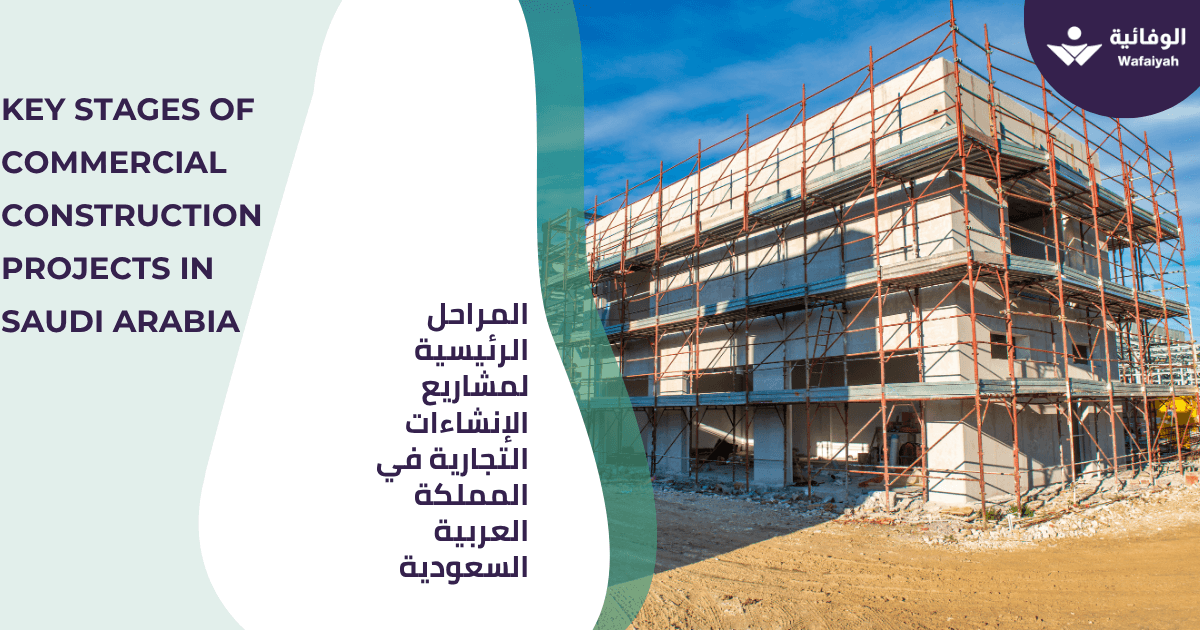
Saudi Arabia’s commercial construction sector is growing fast, driven by major development plans and a push to diversify the economy. With Vision 2030 accelerating investment in new business hubs, retail spaces, and offices, understanding the stages of a construction project is vital for investors, developers, and contractors. At Wafaiyah, we help clients navigate planning, design, and build phases while keeping regulatory, environmental, and cultural needs in mind. In this guide, let’s explain the key stages of commercial construction projects in Saudi Arabia.
Initial Planning and Idea Development
This phase starts with a simple project concept. The client and the team discuss the main purpose, location, and size of the building. Preliminary cost estimates are also prepared along with the planning of key objectives. This phase helps in forming a clear direction before proceeding with detailed work. Proper planning at this stage saves time and prevents future challenges.
Site Selection and Feasibility Study
During this phase, a perfect land is chosen to start working on the project. An inspection is carried out to determine whether the land is the best fit. It inspects the soil type, availability of roads, and local regulations. The team also performs the task to verify whether the project is feasible within the budget and schedule. This prevents all kinds of future risks.
Design and Concept Development
Architects and engineers focus on creating the design of the building. They start to draw and lay out different models to finalize the excellent one. The design will be modified depending on the needs of the client and the local building regulations. This phase provides a clear visual concept of the way the final structure will appear and operate.
Approvals and Permits
Prior to the start of construction, Saudi Arabia requires approvals to be made by the local authorities. This involves construction permits and safety clearances. The project needs to comply with every law and regulation. Obtaining approvals makes the project a legal and safe commercial construction.
Cost Planning and Budgeting
At this step, a detailed budget is made. It consists of the cost of materials, the cost of labor, and other expenses. The team attempts to manage expenses and not to spend too much. A clear budget is useful in managing the money and making sure that the project does not exceed the limits.
Procurement and Contractor Selection
During this phase, the selection of materials, equipment, and contractors is determined. The optimal suppliers are selected based on price, quality, and reliability. The construction work is done by hiring contractors. With appropriate selection, there will be smooth progress in construction.
Completion and Handover
Once the building is complete, it is put in the inspection mode. If everything meets the regulatory standards, it is delivered to the owner. Final inspections are performed to guarantee quality and safety. This stage is the official closing stage of construction work, and the beginning of building use.
Commissioning and Testing
All systems, including plumbing, air conditioning, etc., are gone through proper checking. This makes sure that nothing goes wrong after functioning. Minor problems are resolved prior to full utilization. This step ensures that the building is secure and prepared to be used by people.
Maintenance and Support
The building should be maintained regularly to be in good condition. This involves cleaning, repairing, and checking systems. Maintaining the building properly enhances the life span of the building and avoids significant issues in the future.
Facility Management
Facility management involves day-to-day running activities such as security, cleaning, and repairs. It makes sure that the building operates efficiently. The management system is good to ensure that the building is safe and comfortable for the users.
Performance Review and Monitoring
The performance of the building is checked by monitoring it over time. Energy consumption, safety, and comfort are also checked. This helps in pinpointing weaknesses to be improved and ensures long-term success.
Upgrades and Renovations
No doubt, buildings are always in need of modifications or renovations. This involves the incorporation of new features or the enhancement of the old systems. Renovation helps in maintaining the building to be modern and useful for a longer duration.
Technologies Used in Commercial Construction Projects in Saudi Arabia
Different types of modern technologies are available for modern commercial construction in Saudi Arabia to improve the level of speed and quality. Building Information Modeling (BIM) supports planning and designing through precise digital models. Drones are also used to scout the ground and track the overall construction development.
The use of smart machines and automation tools helps in the construction of buildings faster and with fewer errors. Modern safety measures are applied to protect workers in the field. Part building is also beginning to be done with 3D printing. The technologies are helpful to save time, reduce costs, and enhance the overall quality of the project to keep it more efficient and safer.
Common Challenges in Commercial Construction Projects in Saudi Arabia
Harsh Weather Conditions
Severe heat in Saudi Arabia can slow construction jobs. Employees should receive special training in keeping themselves safe against any health harm. Materials and equipment may also be affected by high temperatures. Weather conditions can delay projects, particularly during summer seasons.
Labor Shortages
Sometimes it is not easy to get skilled workers. Without sufficiently trained labor, projects can be slowed down. This has the potential to influence the quality and speed of construction work. Labor needs should be managed properly by planning.
Expensive Material Prices
The market situation can change suddenly, in which construction materials become costly. A sudden price increase can hit the budget. This renders cost management extremely significant to each project. Proper planning is used to tame costs.
Tough Regulations and Approvals
There are rules and guidelines to be adhered to during construction projects. Obtaining permission from the authorities is time-consuming. Any error made in documentation would slow down the project. One should adhere to all the legal procedures.
Project Delays and Time Management
Delays may occur because of various reasons, such as weather, labor, or supply reasons. Delays can also be caused by poor planning. Time management is also significant to ensure that the projects are done at the right time and prevent unnecessary expenses.
Building a Strong Future in Saudi Arabia’s Construction Sector
In summary, every stage of a commercial construction project matters, from early planning to final delivery. Good planning and careful execution help avoid delays and extra costs. With growing innovation and strict rules, success depends on balance. At Wafaiyah, we see strong opportunities ahead as Saudi Arabia continues to grow.
Frequently Asked Questions
How long do commercial construction projects typically take?
Timelines vary but usually range from 1 to 3 years, depending on project size and complexity.
What permits are required in Saudi Arabia?
Projects require building permits, environmental approvals, and civil defense certifications.
What is the role of BIM in construction projects?
BIM helps with design visualization, coordination, and reducing errors during construction.
What are the common challenges in Saudi construction projects?
Challenges include regulatory approvals, labor issues, climate conditions, and supply chain delays.