

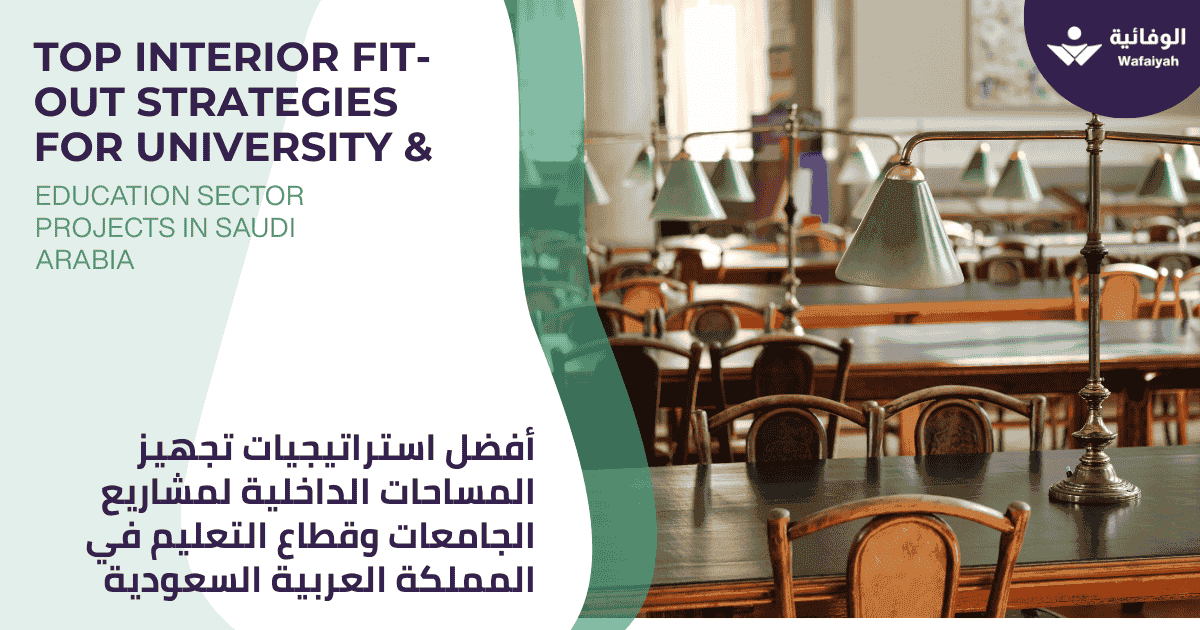
The Saudi education sector is experiencing remarkable growth, supported by government initiatives such as Vision 2030, which aim to modernize learning environments and boost quality education. Modern interior design plays a key role in creating engaging, comfortable, and practical spaces that enhance the learning experience. Wafaiyah explores the latest strategies, trends, and practical tips for university and education sector fit-outs. This contributes to helping institutions design spaces that inspire students, staff, and the broader academic community.
The education sector in Saudi Arabia is expanding at a very high rate, due to governmental grants and increasing demand in higher education. The number of universities and other institutions is on the rise. All these institutions aim to improve their infrastructure and services to students. The industry deals with modern campuses, security, utility, and integration of technology to develop exciting learning experiences and adherence to stringent regulatory and safety rules.
There are ever-rising universities and colleges within Saudi Arabia. Government programs facilitate expansion and modernization programs with the aim of offering quality education. Different facilities, research centres, and services provided to the students will ensure the institutions have the capacity to accommodate more students and offer various programs to the local and international students.
The designs of the campuses are student-centred, safe, and functional. The smart classrooms, grouping areas, and variable designs promote learning and socialization. The current designs promote innovations but provide secure and comfortable learning places to students, which are part of the transition to technology-enabled and student-centred learning processes.
Smart Key Interior Fit-Out Strategies for Universities
Space Planning & Functional Zoning
Effective layouts provide distinct areas for classrooms, laboratories, libraries, and common rooms. Open areas promote teamwork, whereas modular areas give priority to concentrated study. Considerable space planning entails unobstructed flow, flexibility, as well as equal interaction among the learning, social and administrative sections.
Ergonomic & Student-Centric Design
Comfort of students is taken into consideration, and good seating, lighting and acoustics. Ergonomic layouts help in alleviating fatigue and enhancing concentration. Interiors are also interested in wellness and offer health, productivity, and an engaging environment to help students learn effectively and have a good experience on campus.
Sustainable & Green Interior Solutions
Greener campuses are made using eco-friendly materials, energy-efficient systems and natural lighting. Plants and greenery installed indoors enhance the quality of the air and the environment. Green design saves money on its operations and creates awareness among the students and staff of the environmental aspects.
Smart Technology Integration
The classrooms will be fitted with IoT equipment, digital boards and wireless networks. Lighting, HVAC and security are handled through automation. Integration of technology boosts the learning process, makes the management of facilities easier, and the environment more linked and responsive to students and faculty.
Material & Finish Selection for Educational Interiors
The selection of materials is vital for functionality, durability, and the look of the material. The flooring, walls, ceilings, and furniture should be rationalized and comfortable. The choice of easy-to-clean, healthy, and sustainable finishes will guarantee the durability, well-being of students, and modern education standards.
Flooring will resist wear and tear as well as be convenient to wash. Vinyl, laminate and eco-friendly tiles are popular. The flooring options are safe, comfortable and efficient in terms of maintenance, and they also provide a friendly atmosphere for both students and the staff.
Learning spaces are improved using acoustic panels, decorative finishes and soundproofing materials. Flammable and very low-volatile substances will guarantee safety and healthier interior air quality. Thus, aesthetically pleasing treatments will also ensure a favourable campus environment.
The furniture is modular, ergonomic and flexible and facilitates classrooms, offices and communal spaces. Flexible storage and multifunctional designs will meet the changing requirements, which encourage comfort, cooperation, and effective space utilization.
Designing Collaborative & Innovative Spaces: Ideas to Follow
Interactive Learning Zones
Laboratories, maker spaces and technology centers also encourage collaboration and experience. These spaces promote creativity, experimentation, and involvement, reinforce contemporary pedagogical practices and equip students with what happens in the real world.
Common Areas and Student Lounges
Spacious lounges, cafeterias and social areas increase student interaction. The designated common areas make it easy to obtain informal learning opportunities, relaxation areas, and community living environments, which enhance the life of the campuses.
Libraries & Knowledge Hubs
The modern libraries integrate the use of technology with silent study areas and discussion centers. Technology-enhanced resources, flexible seating and learning zones enable research, learning and innovation in an interesting student-centred setting.
Effective Strategies for Acoustics & Lighting Systems
A proper lighting system is a combination of natural and artificial lighting. The LED systems and smart systems that use less energy offer comfort, lower costs and help in the learning processes. Considerate lighting enhances concentration, visibility and environment in the classrooms and corridors and even the common places.
Soundproofing can be used to make lecture halls, classrooms, and auditoriums moderately quiet and functional. The methods and materials make the environment conducive to learning and focus by reducing noise, limiting distractions, and improving the clarity of speech, among other factors.
Safety, Accessibility & Compliance Rules to Follow
Fire safety is also a concern in the university with the installation of fire alarms in strategic locations, automatic sprinklers, and emergency evacuation routes. The interior design and material choices are focused on fire resistance to promote safety among the occupants. A good evacuation design will make sure that all the occupants of the building evacuate safely and in a short time.
The campus should be designed in a way that can be approached by wheelchair users due to accessible design, with the use of wheelchair-friendly ramps, lifts, and toilets. Facilities are designed to accommodate the varying needs of the students and encourage equal participation and comfort in the academic settings in Saudi Arabia towards inclusive education.
The local standards and legal requirements are followed by all the construction and interior work done. Projects receive the required safety, access, and environmental certifications, which guarantee legal and sustainable development of the campus.
Future Trends in University Interior Design Beyond 2025
The trends in interior design at the university are becoming more flexible, sustainable, and technologically driven in the future. Classrooms are becoming learning spaces that are flexible, designed and redesigned into multi-purpose and adaptable environments. This helps to facilitate collaborative learning, individual study and hybrid learning. Life-friendly design is biophilic, that is, natural light is involved, greenery, and sustainable materials encourage well-being and environmentalism.
Engagement and effectiveness are improved with smart technology, e.g., interactive displays, AI-powered resources, and IoT devices. The principles of inclusive design make the design accessible and comfortable to various groups of students. There are also social and recreational areas that are combined to create a sense of community and innovation. All in all, the focus is on the development of dynamic, resilient, and student-centred roles that support the changing educational requirements.
Conclusion
In conclusion, Wafaiyah highlights the importance of functional planning, sustainable materials, and technology integration in modern educational spaces. Creating safe, innovative, and engaging environments enhances learning and fosters growth. Universities and stakeholders are encouraged to invest in modern interior fit-outs, ensuring their campuses inspire students, support staff, and reflect the future-focused vision of Saudi Arabia’s education sector.
Frequently Asked Questions
What are the key interior strategies for Saudi universities?
Focus on ergonomic furniture, sustainable materials, smart classrooms, collaborative spaces, and compliance with local regulations to enhance learning experiences.
How can universities integrate technology into interiors?
Use IoT devices, smart lighting, digital boards, and automated HVAC systems for interactive, energy-efficient, and tech-enabled learning environments.
What materials are suitable for educational interiors in Saudi Arabia?
Durable, eco-friendly, low-maintenance materials like vinyl flooring, acoustic panels, LED lighting, and modular furniture ensure functionality and sustainability.
Why is student-centric design important in universities?
It enhances learning, well-being, collaboration, and engagement by considering ergonomics, flexible spaces, lighting, acoustics, and interactive zones.