

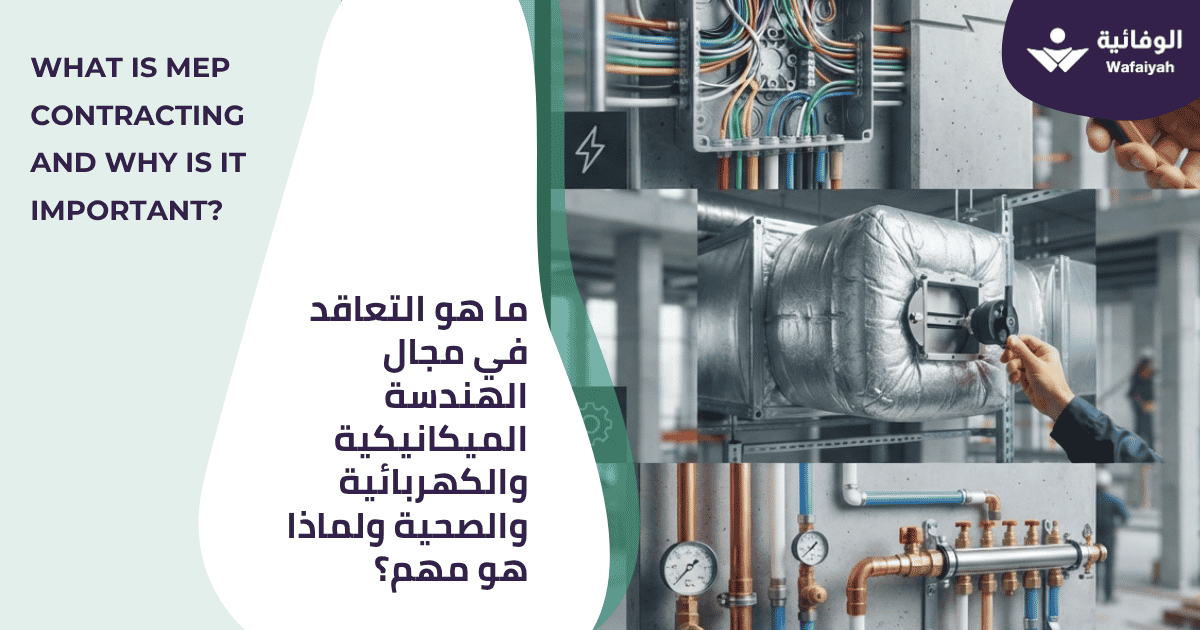
Modern buildings need more than strong walls and attractive designs to perform efficiently every day. MEP contracting manages Mechanical, Electrical, and Plumbing systems that ensure safety, comfort, efficiency, and long-term performance across residential, commercial, industrial, and infrastructure projects. Wafaiyah delivers trusted integrated engineering and construction solutions throughout Saudi Arabia. This article explains MEP contracting, its importance, key systems, benefits, and industry applications.
MEP contracting helps to keep mechanical, electrical, plumbing, and fire protection systems designed, installed, tested, and maintained appropriately throughout construction projects.
These systems ensure buildings are comfortable, safe, efficient, and usable on a day-to-day basis.
Contractors also work with architects, engineers, and construction crews to avoid installation conflicts and ensure that the project requirements are fulfilled. They play a key role in enhancing energy efficiency, reducing running costs, and ensuring adherence to building regulations.
Their work helps ensure safe and reliable heating, cooling, lighting, water supply and drainage, and fire safety systems. The expertise of professional contracting leads to higher construction standards, reduced delays, and enhanced long-term project performance and value for every project it builds.
Improved Building Efficiency
The benefits of professional MEP contracting are the optimization of the building’s systems and their ability to work together seamlessly. When installed correctly, they help to minimize energy losses, optimize performance, reduce operational costs, and provide a comfortable indoor environment. Efficient systems also require fewer repairs and deliver reliable long-term use to the users.
Enhanced Safety Standards
Contractors install systems as per safety regulations and industry standards. Potential hazards are minimized through proper electrical wiring, plumbing, ventilation, and fire protection. Safe installations ensure the safety of people, equipment, and property and ensure that buildings meet legal and construction requirements at all times.
Better Project Coordination
Contractors have to collaborate with architects, engineers, and construction teams throughout the entire process of a project. Effective coordination helps avoid design clashes, installation mistakes, delays, and helps all the building systems fit properly before the next phase of construction is undertaken without issue.
Reduced Maintenance Costs
Professionally designed and installed systems will need fewer repairs and maintenance over time. Over time, the use of quality materials, accurate installation, and testing increases the reliability of equipment, contributes to a longer equipment life, decreases equipment breakdowns, and saves the building owner money on overall operation.
Increased Long-Term Value
For many years, reliable systems have enhanced the performance, comfort, and operational efficiency of a building. High-quality installations deliver improvements to property values, tenants, or purchasers, decreases in future upgrade expenses, and long-term bottom-line improvements in terms of reliable building infrastructure and operation.
Mechanical Systems
Mechanical Systems involve heating, ventilation, air conditioning systems, refrigeration, and the circulation of the air system. These systems provide comfortable heating/cooling temperatures, enhance air quality, regulate humidity, ensure energy efficiency, and create healthy environments in residences, commercial, and industrial facilities during operation.
Electrical Systems
Electrical systems deliver power supply, lighting, a backup generator, wiring, control panels, communications, and electrical safety equipment. Modern buildings and critical daily functions depend on energy supply, efficient operations, occupant safety, and continuous function; all of which require proper electrical installations.
Plumbing Systems
Plumbing can be used to distribute clean water, collect wastewater and sanitary wastes, keep stormwater separate from the sanitary system, and provide sanitary services within buildings. Good plumbing installations enable good hygiene, save water, avoid leakage, minimize maintenance problems, and provide reliable water flow to all occupants day in and day out.
Fire Protection Systems
Fire protection systems are comprised of fire alarm systems, sprinkler systems, smoke detectors, emergency exits, extinguishers, and suppression equipment. These systems are able to quickly detect fire, minimize damage, enhance emergency response, save lives, and consistently meet critical fire safety code requirements.
A professional Contractor is essential for many industries to have safe, efficient, and reliable functioning of buildings. Residential developments need homes that are comfortable places to live, and the utilities are reliable. For a commercial building, good lighting, ventilation, and electrical fit-out are required.
Patient care depends on special mechanical and plumbing systems that are installed in hospitals. Hotels need to have dependable comfort systems and continuous services for their guests. The electrical and mechanical systems are the backbone of industrial facilities in terms of production. Schools require a safe learning environment with effective facilities and resource management.
A friendly building service for day-to-day operations is required at retail centers.
Professional MEP contracting skills also play a vital role in airports, warehouses, government facilities, and mixed-use developments.
Building Information Modelling (BIM) provides better MEP contracting as it allows building a detailed model of the building well before construction is commenced. These models can be used to visualise the mechanical, electrical, plumbing, and fire protection systems together in the building to be used by the contractors.
BIM can resolve design conflicts in the early stages and save on costly design changes on-site. It helps coordinate between architects, engineers, and contractors and aids accurate planning and scheduling. It also improves material estimates, fit and finish accuracy, and project documentation using BIM.
The end result is that better collaboration results in quicker project delivery, reduced construction mistakes, improved quality, and lower costs. By applying BIM, MEP systems can be delivered in a more efficient, reliable, and well-coordinated manner that will function effectively throughout a building’s life.
Frequently Asked Questions
Why is MEP contracting important in construction projects?
MEP contracting ensures that critical building systems are designed, installed, and maintained correctly. It also helps in improving safety, energy efficiency, comfort, and compliance with local building regulations.
What types of projects require MEP contracting services?
It is essential for residential buildings, commercial offices, hospitals, hotels, industrial facilities, educational institutions, shopping malls, and government infrastructure projects.
What is the difference between MEP design and MEP contracting?
MEP design focuses on engineering plans and system layouts. MEP contracting involves procuring materials, installing systems, testing, commissioning, and maintaining them according to approved designs.