

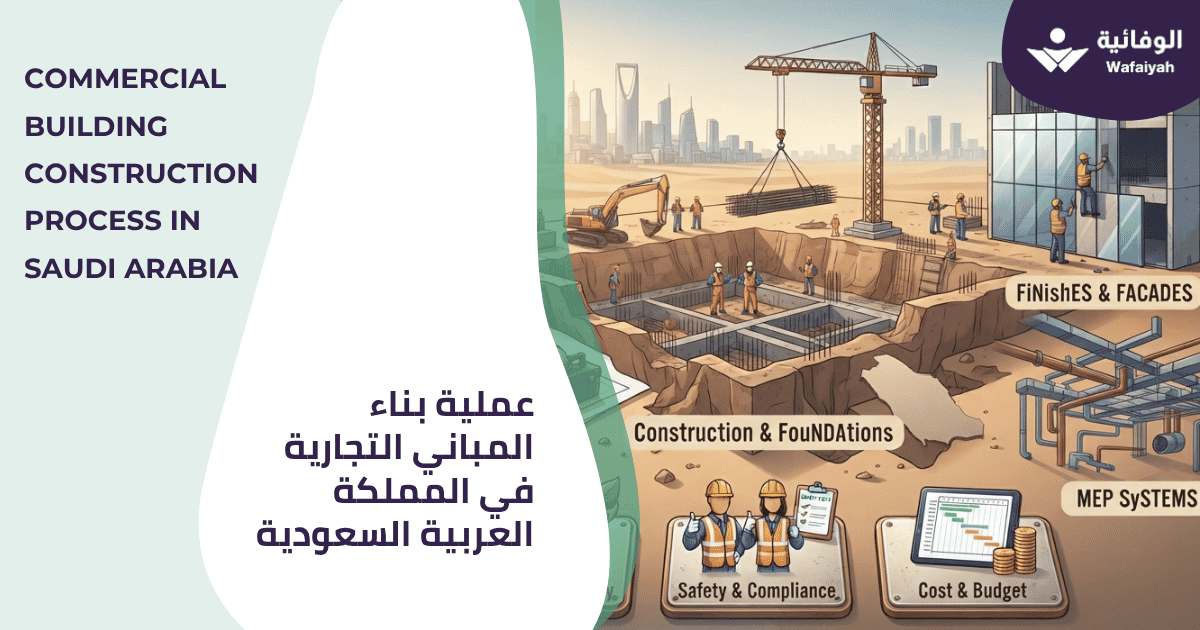
Saudi Arabia’s commercial building construction industry is growing rapidly because of Vision 2030 and increasing business investments. Understanding each construction stage helps investors, developers, and business owners reduce delays, control costs, and achieve better project outcomes. Experienced companies like Wafaiyah manage every project phase efficiently, ensuring quality workmanship, regulatory compliance, and timely delivery for successful commercial developments across the Kingdom.
Project Planning and Feasibility Study
All business building projects start with meticulous planning. Project objectives are set, budgets are prepared, appropriate sites are chosen, market demand is assessed, schedules are estimated, and potential risks are studied. A feasibility study is a detailed report that can be completed to help establish that the project is feasible, profitable, and legally possible prior to construction.
Site Selection and Land Preparation
Once the plan is in place, the appropriate construction site is chosen based on location, zoning, utilities, and business requirements. Engineers check soil conditions, perform land surveys, remove unwanted materials, and prepare the land. A stable site means that construction of a commercial building can be made safely and successfully.
Design and Engineering Development
Architects and engineers create comprehensive designs for buildings that satisfy business needs, safety regulations, and local regulations. Structural, electrical, plumbing, and mechanical systems are properly laid out. Good drawings are essential to the contractor’s understanding of project needs, minimizing errors, facilitating coordination, and helping to ensure smooth construction throughout.
Obtaining Permits and Approvals
Before the developers start work, they need to get all the required permits from the relevant Saudi authorities. Plans for buildings are examined and approved to meet regulations, zoning, environmental, and safety codes. The project will receive official approvals, allowing it to move forward without unnecessary construction delays.
Foundation and Structural Construction
The construction team digs into the ground, lays concrete footings, and constructs the frame and structure with good materials. The columns, beams, floor, and roof systems are completed as per the engineering designs. Hence, the commercial building will be structurally stable, durable, safe, and perform well over time.
Installation of Building Systems
Building systems, such as the plumbing, are installed post-structure. These include electrical wiring, plumbing, HVAC, fire protection, communication networks, and drainage systems. When installed correctly, they optimize the operation of the building, energy efficiency, the comfort of the occupants, safety, and adherence to the specified construction standards.
Interior and Exterior Finishing
The interior and exterior of the building are finished to enhance its use and aesthetics. The contractors install the flooring, ceilings, painting, partitions, windows, doors, landscaping, and exterior cladding. Quality finishing provides the comfort of a business area and will add to the durability, beauty, and value of a property for future tenants.
Inspection, Testing, and Project Handover
Inspectors examine the building before it is completed to ensure it is safe, of high quality, and meets regulations. Electrical, plumbing, HVAC, and fire protection systems are tested by contractors. Once the problems are addressed, the final commercial building is turned over to the owner for occupancy and use.
The regulations issued by the relevant authorities in Saudi Arabia are mandatory for commercial build construction projects, as they aim to ensure safety, quality, and legal compliance. Building permits should be requested prior to construction, and approved zoning requirements should be adhered to for zoning land use requirements.
Buildings must meet the requirements of the Saudi Building Code, which includes such areas as structure, fire protection, electrical, plumbing, and access. During construction, waste management and protection of surrounding areas must comply with environmental regulations. It’s also important that contractors adhere to labor law, workplace safety, and quality standards throughout the project.
Regular inspections to ensure compliance at various stages of construction. Compliance with these regulations can help minimize legal risk, avoid project delays, and protect the health and safety of workers. It also enhances construction quality and ensures the safety, reliability, and suitability of commercial buildings for long-term business use.
There are many challenges that commercial building construction projects may encounter that can impact time, cost, and quality. Permit and approval delays can impact project timelines. The unexpected rise in materials costs and labor rates can lead to an increase in construction activities.
Imported construction materials and equipment might be delayed due to supply chain disruptions. Misunderstandings and expensive errors can arise when project teams don’t communicate effectively. The weather may cause delays to construction on the outside.
Construction changes in design can add to the budget and time to project completion.
Ensuring workplace safety and complying with regulations is also an on-going concern. With careful planning, experienced project management, effective communication, and regular monitoring, these challenges are minimized, and commercial construction projects remain efficient, safe, and successfully completed on time.
Frequently Asked Questions
How long does a commercial construction project usually take?
The timeline depends on the project’s size, complexity, approval process, and construction requirements. Small projects may take several months, while larger developments can require a year or more.
What permits are required for commercial construction in Saudi Arabia?
Projects typically require municipal approvals, building permits, Civil Defense approvals, utility clearances, and compliance with the Saudi Building Code before construction begins.
Why is hiring an experienced commercial contractor important?
Experienced contractors manage planning, design, permits, construction, safety, quality control, and project timelines while reducing delays, risks, and unexpected costs.