

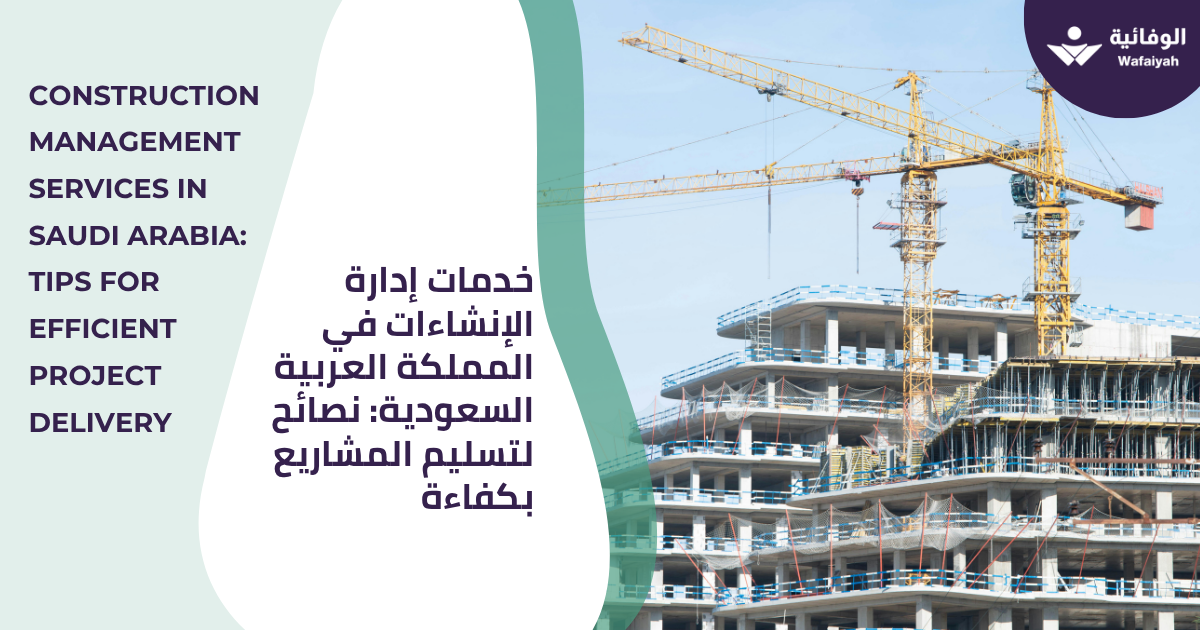
Saudi Arabia’s construction management sector is growing rapidly due to Vision 2030 mega projects such as NEOM, the Red Sea Project, and Qiddiya. This growth is increasing the need for professional construction management services. These services help keep projects on time, within budget, and at required quality. Companies like Wafaiyah support this process through structured planning, coordination, and risk reduction for improved project delivery outcomes. This guide explains the smart tips for efficient project delivery in the construction sector.
Clear Planning and Scope Definition
Good planning is the cornerstone of all construction projects. Before getting to work, establish an easy-to-understand scope for the project. Establish clear objectives, budget, and time constraints. Once everyone is familiar with the plan, confusion minimizes, and work will flow from start to finish more smoothly, faster, and organized.
Effective Communication Among Teams
Communications between all teams are crucial to the success of the project. Provide frequent status reports to engineers, workers, and managers. Keep language and instructions simple. With everyone on the same page, errors decrease, synergies enhance, and the project proceeds smoothly without unneeded delays or misconceptions during the project execution stages.
Proper Resource Construction Management
Careful resource management, such as materials, labor, and equipment, can help to prevent waste and delays. Make plans and timing. Monitor use on a daily basis. The effective control of resources means cost savings, increased productivity, and a successful completion of the construction project in a timely and budgeted manner.
Control of Time Schedule
Effective time management is crucial in construction management projects. Make a realistic plan and stick to it. Divide work into small tasks with time limits. Monitor progress regularly. With time controlled properly, the project is completed on time, no penalties are incurred, and better coordination is achieved among all the teams and contractors.
Quality Control and Assurance
Quality control is imperative for sustained construction management projects. Inspect materials before using and inspect work at all stages. Adhere to the industry standards and safety procedures. Quality checking regularly will allow for the identification of errors early, reduce rework, and allow for the final structure to be strong, safe, and meet all specifications and expectations.
Risk Management Strategies
All building projects come with perils that might involve delays, modifications in costs, or safety concerns. Recognize potential hazards and plan ahead for solutions. Provide safety and emergency training for employees. Good risk construction management decreases the chances of crashes, ensures security for resources, and provides for smoother project execution even under difficult or unexpected conditions.
Use of Modern Tools and Software
The use of modern tools and construction software helps to increase the efficiency of projects. They assist in planning, designing, monitoring progress, and managing data. Digital tools minimize manual errors and save time. The application of the technology can lead to better decision-making, faster communication, and overall improved performance for the entire construction project life cycle.
Importance of Efficient Project Delivery in KSA
The efficient delivery of projects is of crucial importance in Saudi Arabia as the country is rapidly expanding in terms of development and infrastructure. Under national development plans, many large construction management projects are underway. On-time project completion is critical to economic development and public services. It also helps to eliminate cost overruns and boost the confidence of the investors.
In KSA, timely delivery leads to better utilization of resources such as labor, materials, and equipment. It also backs the safety standards and quality expectations. The effective implementation contributes to the achievement of the government’s objectives and the Vision 2030 targets. Overall, it enhances the construction industry and lays a solid foundation for the country’s development and modernization in the future.
Common Challenges in Construction Project Delivery
Cost Overruns
Cost overrun is one of the most frequent problems in the delivery of construction management projects. The actual site conditions, design modifications, and initial estimate inaccuracies can drive up costs. There are added cost control issues, inflation in material costs, and delays that further squeeze budgets and lessen the overall project profitability.
Delay in Schedules
Weather, manpower, material availability, and lack of coordination among stakeholders are common causes of delays in construction projects. Poor planning and unrealistic deadlines are also factors. These delays can have a negative impact on project sequencing and cost and can result in contractual penalties.
Communication and Coordination are Poor.
Worse yet, ineffective communication between clients, contractors, consultants, and suppliers can result in miscommunication and mistakes. No coordination results in rework, task duplication, and design conflicts. Construction management project efficiency and decision-making are drastically lowered without information flow and collaboration.
Quality Control Issues
In construction, it is difficult to ensure a consistent quality because of the differences in workmanship standards, the rush of activities, and the lack of supervision. If substandard materials are used, or specifications are not adhered to, the structural integrity may be compromised. Inadequate inspection procedures raise the risk of defects and long-term maintenance issues.
Role of Modern Technology in Successful Project Execution
The use of modern technology is a very important aspect of a successful construction management project. Project management software, Building Information Modeling (BIM), and digital monitoring systems enhance coordination and planning. These technologies enable real-time monitoring of progress and minimize design and construction mistakes. The use of drones and AI technology for site inspections and safety management.
AI-powered drones for site inspections and safety management. Inter-team communication is enhanced in terms of speed and accuracy. Technology also helps in improved cost management and resource planning. It minimizes on-site delays and boosts productivity. In conclusion, modern technology has revolutionized the construction industry, making it more efficient, transparent, and reliable, resulting in successful project completion within the time and budget constraints.
Focus on Sustainability and Vision 2030 Alignment
The construction industry in Saudi Arabia is moving towards a more sustainable and environmentally responsible approach in line with Vision 2030. Green building codes promote the use of sustainable materials, energy conservation, and reduce carbon footprints in all projects. With the focus on minimizing environmental impacts, construction practices today emphasize the use of resources in the most efficient manner and the use of the best technology.
Waste management strategies involve reducing landfill contributions, reusing, and recycling. Construction management is an important aspect of embedding sustainability principles in planning and delivery. This alignment is in support of national goals for diversified growth and resilient infrastructure. The long-term benefits are reduced operating costs, better environment, and sustainable urban development for future generations, and resilience now.
Conclusion
In a nutshell, construction management services are very important in Saudi Arabia for improving efficiency, controlling risks, and ensuring quality delivery. Demand is growing due to mega projects and infrastructure expansion. Companies like Wafaiyah help ensure success through planning, technology, and expertise integration for optimal outcomes and overall success.
Frequently Asked Questions
What types of projects require construction management?
Infrastructure projects, commercial buildings, residential developments, industrial facilities, and giga-projects like NEOM all require professional management.
How does technology improve construction management?
Tools like BIM, AI, and project management software improve accuracy, communication, monitoring, and decision-making in real time.
What challenges are common in Saudi construction projects?
Challenges include supply chain delays, labor coordination, regulatory approvals, harsh climate conditions, and large-scale project complexity.