

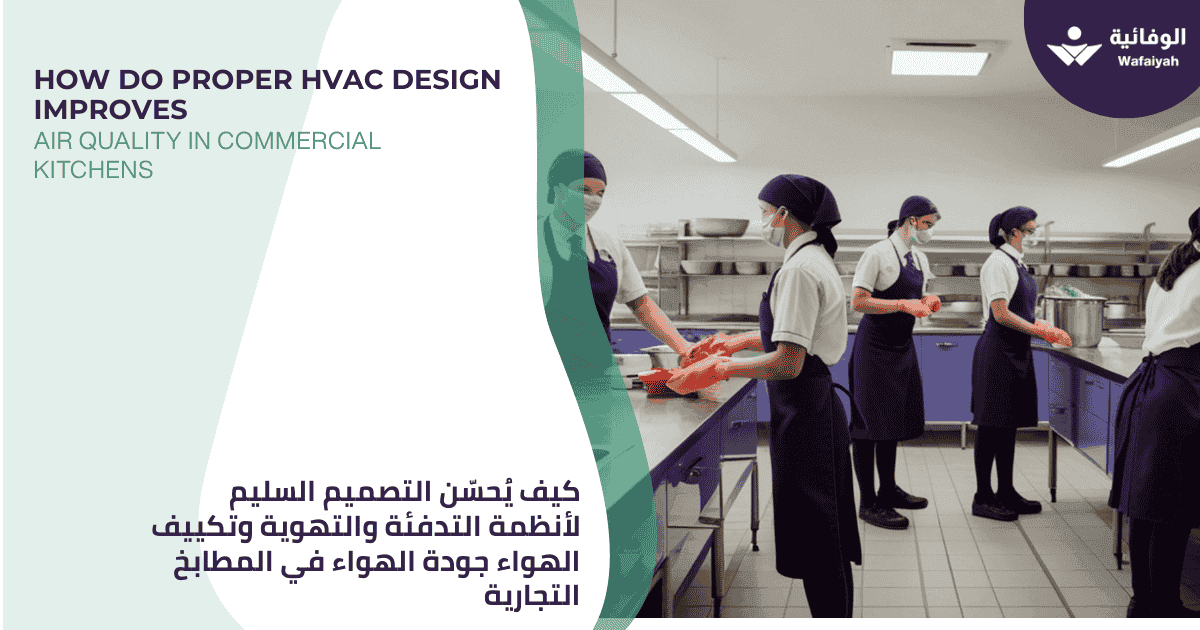
Commercial kitchens face unique challenges, including excessive heat, smoke, grease buildup, and persistent odours, all of which can impact the comfort and safety of staff. Maintaining high air quality is essential not only for the health of employees but also for operational and regulatory compliance. HVAC (Heating, Ventilation, and Air Conditioning) systems play a critical role in managing these conditions by controlling temperature, removing pollutants, and ensuring a safe, clean, and comfortable working environment. Wafaiyah provides solutions that enhance system performance, lower energy demand, and contribute to more sustainable, cost-effective commercial spaces.
Commercial kitchens comprise reliable systems to control heating, ventilation and air conditioning for maintaining comfort, wellbeing and energy performance. They keep the best indoor temperatures, regulate air, and eliminate pollutants. Well-developed systems reduce the operating expenses and increase the productivity and safety of the occupants. Energy-saving systems combine innovative gadgetry, intelligent controls, and meticulous system design.
Maintenance helps in ensuring the reliability of performance and extends the life of equipment. These systems are equally essential in offices, malls, hospitals, and factories because they are comfortable and sustainable. Selecting the appropriate system is beneficial in the long-term energy savings, better indoor air quality, and commercial spaces that meet the current environmental requirements.
Factors Affecting Air Quality in HVAC Systems
Selection of Best Equipment
The choice of equipment with high efficiency has a direct effect on energy consumption. Units of suitable sizes eliminate overworking or underperformance. New systems use less energy and are equally comfortable. Modifying the components, e.g. compressors and fans, increases efficiency. Quality equipment also saves on the cost of maintenance, increases the life cycle and reduces energy consumption. Commercial kitchens are essential in terms of investing in the appropriate equipment.
Reliable System Design
HVAC design should be efficient to provide correct airflow, temperature, and balance of the system. Energy loss is reduced by proper duct design, zoning and insulation. Vents and sensors should be placed strategically to enhance performance. Careful design saves on equipment load, comfort, and the cost of operation. Energy-saving performance in kitchen areas can be based on a properly thought-out system.
Building Envelope
Walls, roofs and windows determine the energy efficiency of a system. Heat gain and loss are avoided through high-quality insulation, airtight construction and energy-efficient glazing. The building envelope is robust and saves energy through the reduction of system workload. Envelope integrity guarantees the uniformity of indoor temperatures, equipment protection and enhances occupant comfort. It contributes to commercial energy management.
Focus on Control Systems
State-of-the-art control systems regulate temperature, air conditioning, and energy consumption. Occupancy sensors and smart thermostats are automated to manage heating and cooling. Automation will help to save unnecessary energy and make it comfortable. Well-programmed systems increase efficiency and reduce the cost of operation. Modern controls can be integrated into commercial kitchens to ensure that they work in a more sustainable and energy-conscious manner.
Following Maintenance Practices
Periodic maintenance makes systems efficient and reliable. Waste on energy is avoided by cleaning filters, checking ducts and servicing components. Properly maintained equipment uses less power, works more efficiently and is more durable. Periodical checks minimize the chances of failures and ensure comfort. The maintenance process is a key process to achieve energy efficiency in commercial kitchens.
Occupant Behaviour
The occupant’s behaviour can influence the energy consumption of the HVAC. Their use of thermostats that are either too high or too low, covering vents, or operating equipment when they are not needed, raises their energy use. Training occupants on energy-savvy behaviours will minimize wastages and improve the efficiency of systems. Technology is supplemented by behavioural awareness to make systems work efficiently, but comfortably and sustainably.
Smart HVAC Design Strategies for Energy Efficiency
Zoning Systems
Subdivision of a building into heating and cooling areas makes it more efficient. The occupied spaces are provided with the best comfort, and the unoccupied regions consume little energy. Zoning enables accurate control of temperature, which minimizes strain and waste of energy in systems. This method will enhance comfort, reduce the cost of operation and make sure that the systems are efficient in various regions within commercial kitchens.
Variable Speed Equipment
Variable speed compressors and motors change the output based on demand. This eliminates the unnecessary consumption of energy and avoids the wear and tear of equipment. It operates systems which operate in a smoother way, and at correct temperatures and use less power. The variable speed equipment improves comfort and efficiency at the same time. It is a valid approach to current commercial HVAC energy management.
Energy Recovery Ventilation
In outgoing air, energy recovery ventilators recycle the heat or cooling of incoming air. This saves on the energy required to condition fresh air. It keeps the indoor air quality controlled and reduces the use of energy. Energy recovery systems are used in large commercial kitchens to maximize efficiency in ventilation, reduce load, and aid sustainability without negatively affecting comfort.
Smart Thermostats and Sensors
HVAC settings are changed automatically with smart thermostats and occupancy sensors. They react to the presence of people in the building and the adaptability of the environment and avoid the needless heating or cooling. This saves on energy and still makes one comfortable. By incorporating such devices into commercial systems, performance is improved, and the building environments can be controlled more effectively at any time of the day.
Incorporation of Automation
By combining HVAC with building automation, it is possible to monitor and control them centrally. Automation enhances the responsiveness of the system, eliminates energy wastage, and reduces human error. Centralized control increases the efficiency of operations, comfort and sustainability within commercial spaces. It is one of the strategies of energy management in modern times.
Decent Insulation and Sealing
HVAC energy loss is minimized by insulating ducts, sealing leaks and installing energy-saving windows. The building envelope is well sealed, which reduces heat loss and gain in the building, enabling the systems to work well. Appropriate insulation will help reduce stress on equipment, decrease energy expenses and enhance comfort. This plan promotes green building construction and the durability of the system.
Conclusion
Summing up, reliable HVAC system design significantly impacts energy use in Saudi commercial kitchens. Considering climate, equipment, controls, and building integration ensures optimal performance and lower costs. By focusing on the energy system, designers, owners, and engineers can achieve both financial savings and environmental benefits. Wafaiyah offers solutions to support smarter, sustainable building projects across the region.
Frequently Asked Questions
What is the role of HVAC in energy consumption?
These systems can account for up to 50% of energy use in commercial kitchens, making performance crucial for cost savings.
How does proper sizing improve performance?
Correctly sized equipment reduces energy waste, maintains comfort, and avoids frequent on-off cycling, enhancing overall system functioning.
What technologies improve HVAC energy systems?
Variable air volume systems, energy recovery units, smart thermostats, and high-SEER equipment significantly reduce energy use.
Can HVAC reduce kitchen fire hazards?
Yes. Proper ventilation removes grease and smoke, minimizing flammable buildup and lowering the risk of fires in commercial kitchens.