

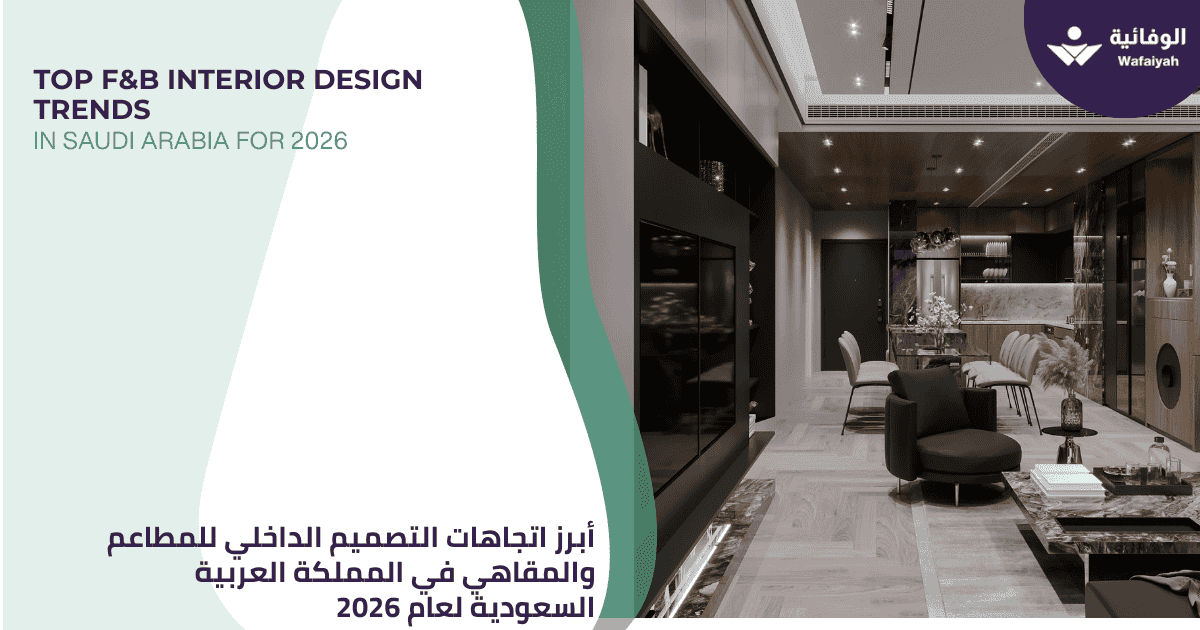
The Food and Beverage industry in Saudi Arabia is transforming rapidly due to a combination of things like lifestyle dining, growth in tourism, and the Saudi Vision 2030 plan to diversify its economy. In 2026, the focus of F&B interior design is on the overall experience, multi-purpose use, and brand identity rather than just purely as décor. To accomplish this shift in thinking, restaurants and cafes are investing in interiors that feel modern, culturally connected, and support the operational efficiency of the F&B and hospitality industries. Thoughtful space planning helps create an environment that attracts guests and keeps them there longer. It supports and facilitates growth for the F&B industry. We will discuss here the top interior design trends that are modernizing F&B spaces in KSA.
Biophilic & Nature-Inspired Interiors
Saudi Arabia’s food and beverage interior designs have become ever more in tune with natural elements that improve comfort and well-being. These designs use indoor plants, living green walls, natural wood, and stone finishes to enhance calm and relaxation when dining out. The extra use of windows and soft daylight increases overall ambiance, leaving diners feeling refreshed, welcomed, and relaxed. It also encourages them to stay longer and supports sustainable and health-conscious restaurant concepts.
Saudi-Inspired Contemporary Design
Modern F&B interior design in Saudi Arabia evokes the country’s dominant cultural influences through its current refined interpretations of Islamic patterns. The Islamic patterns are deconstructed and used in a more subtle way via walls, screens, or flooring. It is employed using earthy desert colours and traditional local material to reinforce the identity of the restaurant while respecting and remaining contemporary to the heritage of the country. This interior design approach creates a strong connection between customers and creates the opportunity for restaurants to establish brand recognition. It makes identity among both the domestic and international customer markets.
Experiential & Immersive Dining Spaces
F&B interior design is creating memorable experiences instead of merely being functional areas in which to eat. Excellent interior design elements—lighting, acoustics, texture, and space zoning—work in unison to create the right mood for dining, as well as provide an experience for guests with different atmospheres throughout the restaurant. This immersive experience provides customers with a higher level of interaction with the restaurant, resulting in more frequent visits and increased brand loyalty in one of Saudi Arabia’s most competitive F&B markets.
Smart & Technology-Integrated Interior Designs
Various technologies are integrated into modern F&B interiors without disrupting the aesthetic appeal of the establishment. F&B interior designers utilize smart lighting to adjust to time as well as to create an appropriate environment for diners. The use of digital menus and touchless ordering systems enables operators to create a more efficient environment while also promoting greater hygiene for customers. Climate control and sound systems also provide added comfort to guests. By utilizing technological innovations in their interior designs, the management is able to create an efficient work environment, portray a modern and innovative brand image, and ensure continued growth of their restaurant and café marques.
Flexible & Multi-Functional Layouts
Flexibility is a key focus of modern Food and Beverage interiors in order to maximize their available space and increase revenue. The use of modular furniture and flexible layouts allows a restaurant to change its use throughout the day. For example, a café may be used for casual dining in the morning and later transformed into a lounge at night. Flexible layouts make it easy to create space for special events or peak dining periods, making this design strategy especially appropriate for urban areas and mixed-use development.
Curved Forms & Organic Shapes
Many F&B interiors are also experiencing a shift from more traditional and rigidly shaped forms to more “curvy” or organic shapes. Examples of this include curved seating, rounded countertops, and arching walls. These forms create a comfortable and welcoming space where people can move freely throughout and socialize with one another. The result is a warm, contemporary space with a luxurious yet approachable feel making it an ideal option for cafés, casual dining facilities, and contemporary hospitality environments.
Sustainable & Natural Material Selection
The design of modern F&B interiors involves sustainable practices that essentially affect the design of the environments. Natural products such as wood, stone, and many recycled finishes are increasingly being used due to their performance features, longevity, and durability as well as their natural beauty and ability to withstand the test of time. As these materials age, they have less impact on the environment. Providing sustainability in a restaurant can assist the business in aligning with Saudi Vision 2030 as well as building trust with eco-friendly consumers who seek out responsibly produced, high-quality, and comfortable dining environments.
Statement Features and Social Media Appeal
In addition to sustainability, F&B interiors incorporate bold design features that draw attention to the venue, increase the brand visibility of the venue, and entice consumers into sharing photos of their experience on social media. Statement lighting, unique wall treatments, and creative ceiling treatments provide an impact through design, and contribute to social media sharing and organic publicity. Greatly designed elements also act as a marketing tool for interior designers when designing for modern, trendy cafés and lifestyle dining venues that focus on attracting younger consumers.
Impact of Strategic Interior Design on Productivity in F&B Industry
Strategic interior design can help to improve productivity in F&B environments through optimizing workflow, comfort, and efficiency. Smartly designed interiors help to reduce staff movement around the space and decrease the time it takes staff to provide service to guests. Proper lighting, acoustics, and ventilation allow staff and guests to concentrate and increase energy levels. Ergonomically designed seating and well-defined zoning improve customer comfort and increase customer turnover. Ultimately, when the interiors of settings support the operations of the business as well as enhance the experience of those visiting the business, the combined benefits speed up the pace at which teams operate and increase the satisfaction of guests. It provides a consistent improvement in the overall performance of the business.
Experiential & Immersive F&B Interior Design
Transforming restaurant interiors with an experiential design approach changes how we experience food and beverage spaces. Instead of simply being a place to eat, these types of spaces become destinations, where the lighting, sound, texture, and the separation of areas are planned carefully enough to provide a specific ambiance.
Each area of the restaurant has its own distinct ambiance while still being visually connected. These types of designs create deeper levels of engagement and create an emotional connection for the guest with the restaurant. In KSA’s competitive F&B sector, immersive interiors help brands to differentiate themselves in the market and build customer loyalty to drive repeat visits.
Flexible & Multi-Functional Restaurant Layouts
Because of the constantly changing operational demands of F&B businesses, modern interiors are designed with flexibility and multifaceted functionality. To create flexibility, there is an emphasis on the use of modular furniture and a smart layout to transform from a daytime cafe to an evening dining or lounging experience.
In addition, the zones in the F&B space can also be adjusted to accommodate daypart-specific events, peak times of operation, or privately hosted events. Effective flexible interiors maximize the spaces that they occupy, and therefore the revenue that can be generated from those spaces. This type of flexible interior is especially beneficial in urban and mixed-use development areas.
Professional F&B Interior Design Services by Wafiyah
Wafiyah provides professional fit-out and interior design solutions that are tailored for contemporary F&B environments in Saudi Arabia. By working closely with clients throughout the entire project life cycle—from coordinating structural aspects of a build infrastructure to providing integrated systems within the building itself—Wafiyah ensures that an interior will operate as well as it looks. Wafiyah’s expertise enables restaurants to meet their operational needs smoothly, build their establishments for long-term usability, and follow all local codes, making Wafiyah a trusted partner for developing high-quality and high-performance F&B projects.
Build a Future-Ready F&B Space Today
When it comes to building your ideal restaurant or updating the design of your existing café, Wafiyah can assist you in designing a space that meets the requirements of today’s sophisticated restaurant customers through their understanding of modern design requirements. Whether you want help with design conceptualization or your contractors need assistance with technical execution, selecting the right project partner will affect how successfully your desired functional, aesthetically pleasing, and future-proof F&B environment will be created. We help to increase customer experience with best interior design while improving the profitability of your business. Choose Wafaiyah for outstanding and modern interior design services in Saudi Arabia.
The Future of F&B Interiors in Saudi Arabia
Interior Designers working in the Food and Beverage sector in Saudi Arabia for 2026 will create experiential, adaptable, and strategically planned environments. Successful F&B Interiors reflect both the brand’s identity through the aesthetics of the property and its functionality through the operation of the business in terms of guest experience and operational flow. While this has been a common given, creating these types of spaces through experiential and flexible layout options will become less of a choice and more of a necessity for restaurant operators wishing to attract the new generation of customers. Call Wafaiyah to hire for interior design services in KSA.
Frequently Asked Questions
Does staff productivity increase in restaurants due to good interior design?
Yes, good layouts decrease unnecessary movements, boosting flows of work, allowing employees to serve food and drink quickly.
Can good interior design create higher customer turnover rates in Food & Beverage?
Yes, if the interior is designed with comfortable seating, clear pathways, and adequate lighting, it can improve customers’ experience of dining.
Does good lighting increase productivity in restaurants and cafés?
Yes, employees have improved visibility, mood, and ability to focus on the task, as well as improved presentation of food to customers.
How does acoustic design impact productivity in restaurants?
By controlling noise to tolerated levels employees and customers can communicate effectively, creating pleasant dining experiences for employees and customers.
Who is the best contracting company to hire for interior design services in Saudi Arabia?
Wafaiyah is the best contracting company to hire for interior design services in Saudi Arabia.
Why is good ventilation necessary in F&B interior design?
Good ventilation improves the quality of air by controlling temperature and humidity. It helps customers remain comfortable.