

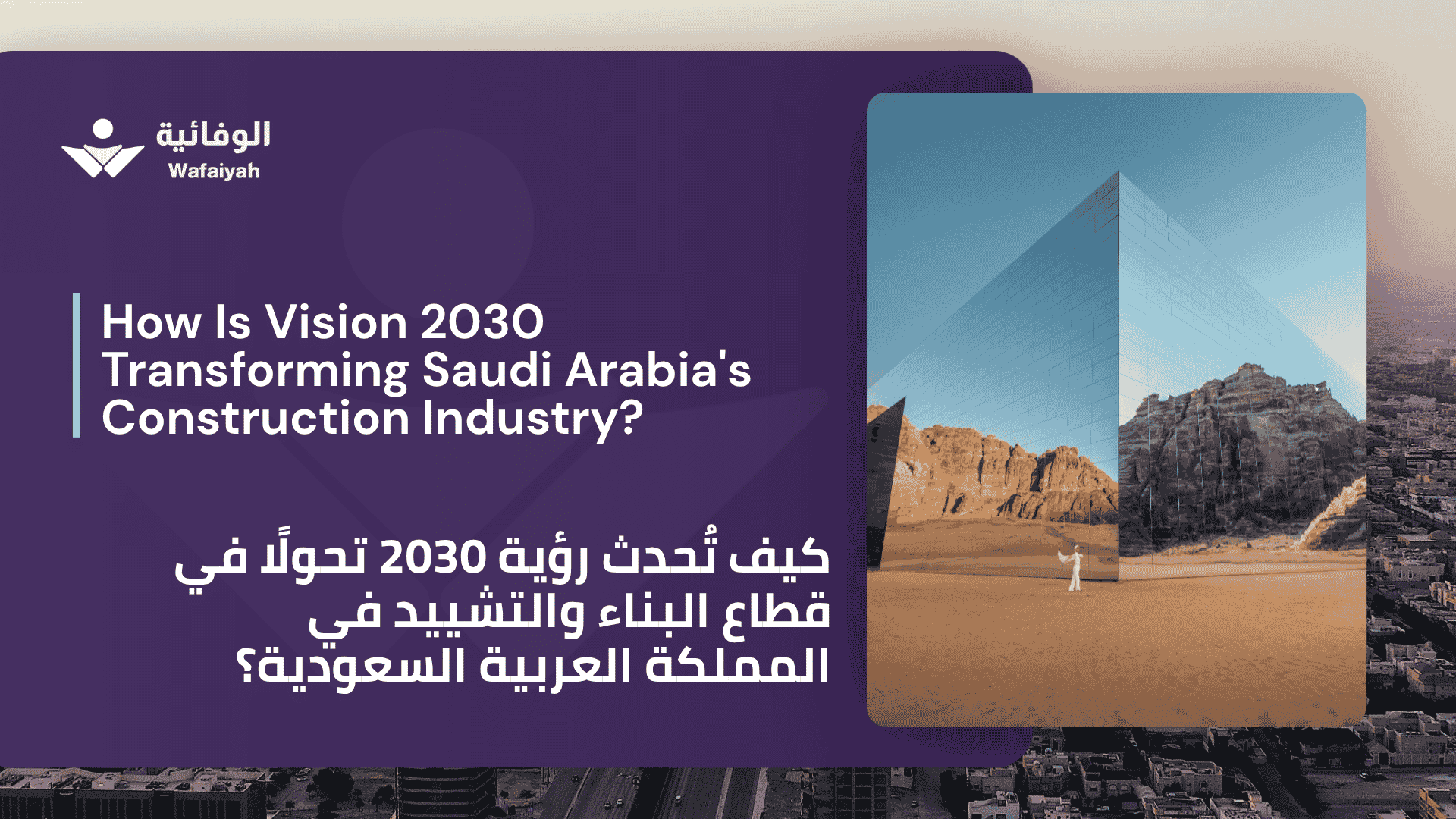
Saudi Arabia’s Vision 2030 is driving a transformation of unprecedented scale, reshaping its economy, cities, infrastructure, tourism, and quality of life. Construction is not merely supporting this transformation; it is one of its principal delivery mechanisms. As the Kingdom moves beyond conventional construction, integrated, technology-enabled, sustainable, and coordinated project delivery is becoming essential. Wafaiyah positions itself across integrated construction, MEP, infrastructure, planning, execution, project management, and post-construction services.
What Is Vision 2030 and Why Does Construction Matter?
Saudi Arabia’s national plan, Vision 2030, aims to diversify its economy, enhance its quality of life, and move away from reliance on oil. It is no wonder that construction is an important factor, as the vision calls for new cities, tourist destinations, transport infrastructure, housing, hospitals, entertainment facilities, and business centres. Significant investments are increasing, and jobs are being generated, while industries are finding support.
Construction also contributes to enhancing infrastructure and linking communities throughout the nation. Such projects develop, which results in the demand for skilled employees, advanced technology, engineering, and professional services. Thus, the construction project is not just about creating physical structures, but also contributing to Saudi Arabia’s broader economic and social objectives.
Major Mega Projects Are Reshaping the Scale of Construction
NEOM and Next-Generation Urban Development
NEOM is an example of a new approach to large-scale urban development, which is based on cutting-edge technology, sustainability, and innovative infrastructure. It has comprehensive projects that require advanced construction techniques, transportation infrastructure, utilities, and engineering. The contractors have to deliver complex structures while adhering to high sustainability standards, incorporating smart technology, and coping with the scale of the projects with efficiency and safety.
Qiddiya and the Growth of Entertainment Infrastructure
Qiddiya demonstrates how entertainment, sports, and leisure are generating new categories of construction projects that include tourism. Commercial buildings, hotels, stadiums, event venues, recreational facilities, and massive supporting infrastructure are all necessary for these developments. Construction firms need to effectively operate in a broad range of projects and provide for the complex requirements of large-scale facilities that operate around-the-clock to serve year-round economic activity.
Red Sea and Tourism Development
Red Sea tourism development has created a growing need for luxury resorts, hotel opportunities, utilities, transportation, and supporting infrastructure. Projects usually have to be built where environmental impacts can be felt, and must be planned and built in a sustainable way. This provides opportunities to contractors with experience in remote site construction, state-of-the-art utilities, environmental protection, and quality hospitality development.
Diriyah, ROSHN, and Urban Communities
Diriyah and ROSHN developments is a mix of cultural tourism and urban regeneration developed through Diriyah and ROSHN. Construction businesses have to take into account numerous aspects of the project, including aesthetics, function, infrastructure, sustainability, and maintenance, when building these projects. The key to successful delivery is to coordinate buildings, public space, utilities, transport, and community facilities to provide integrated city environments for sustainable value drivers.
Technology Is Changing How Saudi Construction Projects Are Delivered
Construction projects in Saudi is becoming faster and more accurate, with the help of technology. Building Information Modelling (BIM) enables the team to build digital models of the building and to highlight design issues before construction starts. Drones can cover big areas, go into hard-to-access areas, and give relevant progress data.
Companies can use artificial intelligence and data analytics to plan schedules, manage resources, and identify potential risks. The use of robotic and automated equipment is also increasing in its application for choking or repetitive tasks is also being increased.
Cloud-based platforms will improve the way and how fast information can be shared for project teams to communicate. All of these technologies can help minimize delays, safety risks, and cost control, and help in better decision-making during the course of a project.
Vision 2030 Is Creating Demand for Integrated Construction Services
Vision 2030 is calling for businesses to offer a broader range of services. Design, engineering, technology support, procurement, construction, project management, and maintenance may be needed for large developments. Integrated services can enable clients to handle various project phases across fewer independent teams. This can enhance communication, minimize delays, and provide cost and quality control.
Specialist solutions in the areas of infrastructure, sustainability, digital systems, and building use are also needed for complex projects. Being able to work on major projects will be more relevant for construction companies in Saudi Arabia in the coming years as it continues to invest in the same. Integrated services can be used to deliver projects more efficiently, in order to achieve the awarding technical and performance requirements.
Predicted Future for Saudi Arabia's Construction Industry
As the development of Saudi Arabia continues with Vision 2030 projects, construction will be an important sector in the economy. Demand will be increasing for infrastructure, housing, tourism facilities, commercial buildings, transport systems, and technology-based projects. Sustainability will be a growing concern, and more emphasis will be placed on energy conservation, water use, and using sustainable materials.
There will also be an increased focus on the use of digital tools, automation, and data-driven project management. Concurrently, there will be a demand for educated professionals who can handle more complicated projects and work with contemporary technologies. Overall, the future appears to be busy and competitive as construction is still continuing to help Saudi Arabia in its economic transformation and development.
Conclusion
Vision 2030 is reshaping Saudi Arabia’s construction landscape through mega projects, infrastructure, technology, sustainability, integration, and private-sector opportunity, making capable partners like Wafaiyah essential to delivering the Kingdom’s long-term development ambitions.
Frequently Asked Questions
How is Vision 2030 affecting construction?
It increases construction demand through megaprojects, housing, tourism, transport, utilities, industrial development, urban infrastructure, and new communities.
What are the major Vision 2030 construction projects?
Key projects include NEOM, Qiddiya, Red Sea developments, Diriyah, ROSHN communities, and major infrastructure programs supporting national transformation.
How is Vision 2030 changing construction standards?
Vision 2030 encourages smarter, safer, more sustainable construction through innovation, digitalization, efficient resource use, and stronger quality standards across major projects.
How does Wafaiyah support Vision 2030?
Wafaiyah supports Vision 2030 through integrated construction, MEP, infrastructure, commercial building, renovation, maintenance, and engineering services across Saudi Arabia today.