

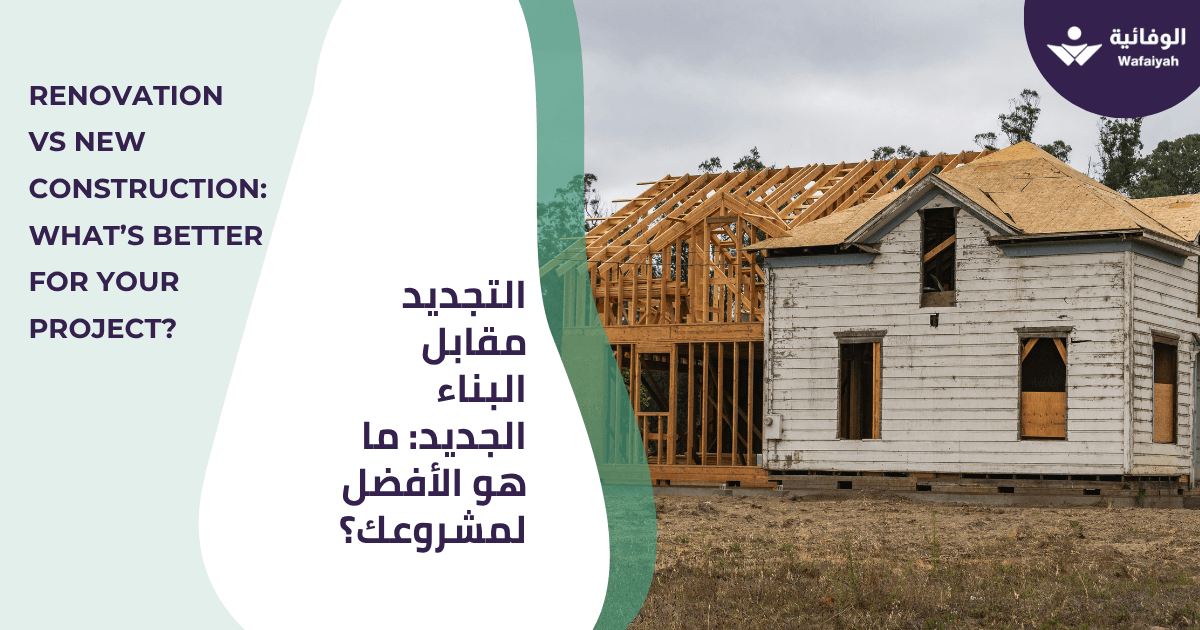
Property owners often face a common dilemma when choosing between renovating an existing structure and building from scratch. This decision can strongly affect budget, timeline, functionality, and long-term property value. Careful evaluation of project goals is essential before selecting the right approach. Professional construction experts like Wafaiyah help clients make informed decisions.
This guide explains key differences between renovation and new construction and helps readers choose the best path forward.
Cost Comparison
Home renovation will typically be less expensive since the existing foundation, walls, and structure are being reused. New construction costs more money because it comes with constructing everything from the ground up, from materials to manpower. Additional money might be needed for renovations that are not likely to be seen until the work is done, or at least much more unpredictable. Hence, construction may be more predictable in terms of budgeting and have less hidden money.
Time Duration
Renovations are typically short since the basic shell is already in place. Building new will be a longer process as each phase is built from scratch. Both are impacted by the weather, approval, and labor requirements. But in terms of the overall process of construction, new construction takes a longer time with more planning involved.
Design Flexibility
When building new, the design is limitless as everything is being built from scratch. Limitation of the renovation due to the old walls, structure, and layout. New construction can present enhanced rooms, materials, and architecture. Renovation can enhance the appearance and function, but it may lack the full extent of customization that can be achieved in construction due to the limitations of old building design.
Structural Limitations
The size of the changes for renovation will depend on the condition and strength of the existing structure. For construction, there are no restrictions, as everything is new. While in renovation, structural changes and removal of walls may not be feasible, in new construction, the structural control and planning freedom can be enjoyed.
Permits and Approvals
Depending on the type of changes, there are generally fewer permits for renovation than for construction. There are several approvals that must be obtained for new construction, such as land use, design, and safety compliance. Because of this, paperwork and regulatory requirements are more complex in construction and generally less so in renovation.
Disruption and Living Conditions
Some people might be able to live there during the renovations, but renovations can cause noise, dust, and inconvenience. When new construction is being done, it is typically done at another residence until the project is finished. As a result, in some instances, a renovation will be less disruptive, and construction will completely isolate occupants from the construction process.
Renovation vs New Construction: Comparison Table
Feature | Renovation | New Construction |
Definition | Updating or improving an existing building | Building a completely new structure from scratch |
Starting Point | Existing structure already in place | Empty land or a demolished site |
Cost | Usually lower, but can vary with hidden issues | Higher initial cost but more predictable |
Time Required | Often shorter, but delays are common due to surprises | Longer overall but more controlled schedule |
Design Flexibility | Limited by the existing structure | Full freedom in design and layout |
Permits & Approvals | Often simpler, but it depends on the extent of changes | More extensive approvals are required |
Structural Risks | Higher risk of hidden damage (wiring, plumbing, foundation) | Lower risk since everything is new |
Sustainability | Reuses existing materials (eco-friendly) | More resource-intensive |
Customization | Partial customization only | Fully customizable |
Uncertainty Level | High (unknown issues may appear during work) | Lower (plans are clearer from the start) |
Value Addition | Improves existing property value | Creates entirely new assets |
Renovation vs New Construction: Questions to Ask Before Deciding
How much is the budget?
Make a careful consideration of your available budget before deciding. Though renovation may appear to be less expensive, there may be unplanned repair work that adds to the expense. Construction requires more start-up capital, but is more certain in costs. Once you have that in mind, you’ll be better able to select one that makes sense for you and fits your budget.
What is the purpose and future needs?
Have your own thoughts about the future goals you want to achieve with your home. Renovation will do a better job of enhancing an existing space, and where there is a completely new need, new construction will serve you better. Keep your family size, lifestyle, and future usage in mind when making your choice to ensure that it best fits current and future needs.
What is the condition of the existing structure?
Ensure that a building assessment is performed prior to a decision being made. Renovation may be an option if it is a strong structure. Construction might be safer and more convenient if there are significant structural issues. Correct assessment will prevent additional risks and costs.
How many time limitations do you follow?
Think about your desired project timeline. Renovation typically involves less time since it utilizes the current building. Planning, approval, and construction stages make new construction take longer. In some situations, renovation might be a better choice for your needs if time is limited.
What are your legal and approval requirements?
Ensure that all legal permissions are checked prior to working. Generally, fewer approvals are required for renovations as opposed to construction. For new construction, there are detailed permits and building codes. It is useful to understand the requirements of the law early to avoid delays, fines, and unplanned administrative problems throughout the project.
Can you define your long-term investment goals?
Don’t make decisions based on short-term financial considerations. Higher property values and increased efficiency are normally associated with new construction. Even with a little renovation, it can increase in value when done properly. You should choose a home mortgage based on your goals, your maintenance plans, and your resale plans for the best possible outcome.
Renovation vs New Construction: Final Verdict
Renovation vs new construction depends on goals, budget, and site conditions. Renovation is best when the existing structure is sound, the location is prime, or the budget is limited. It preserves value, reduces cost, and is faster, but may have hidden structural issues and design constraints.
Construction is best for long-term flexibility, modern design, and minimal maintenance. It allows full customization, better energy efficiency, and compliance with current codes, but costs more and takes longer.
Overall, renovation suits quick, cost-sensitive upgrades, while construction is superior for complete transformation and future-proofing. The best choice is context-driven, and project-specific analysis matters most always.
Conclusion
Renovation and new construction differ in cost, time, and outcomes, and there is no universal answer. The right choice depends on budget, timeline, property condition, and future goals. Always consult professionals before deciding. Wafaiyah is right here to give you expert guidance and consultation today for the best results in upcoming projects.
Frequently Asked Questions
How do I know if my building should be renovated or rebuilt?
A professional structural assessment can determine whether the existing building is suitable for renovation or if rebuilding is the better option.
Which option adds more property value?
Both can increase value, but the best choice depends on the property’s condition, location, and market demand.
Does renovation take less time than new construction?
In many cases, yes, but large-scale renovations can sometimes take as long as a new build due to unforeseen issues.