

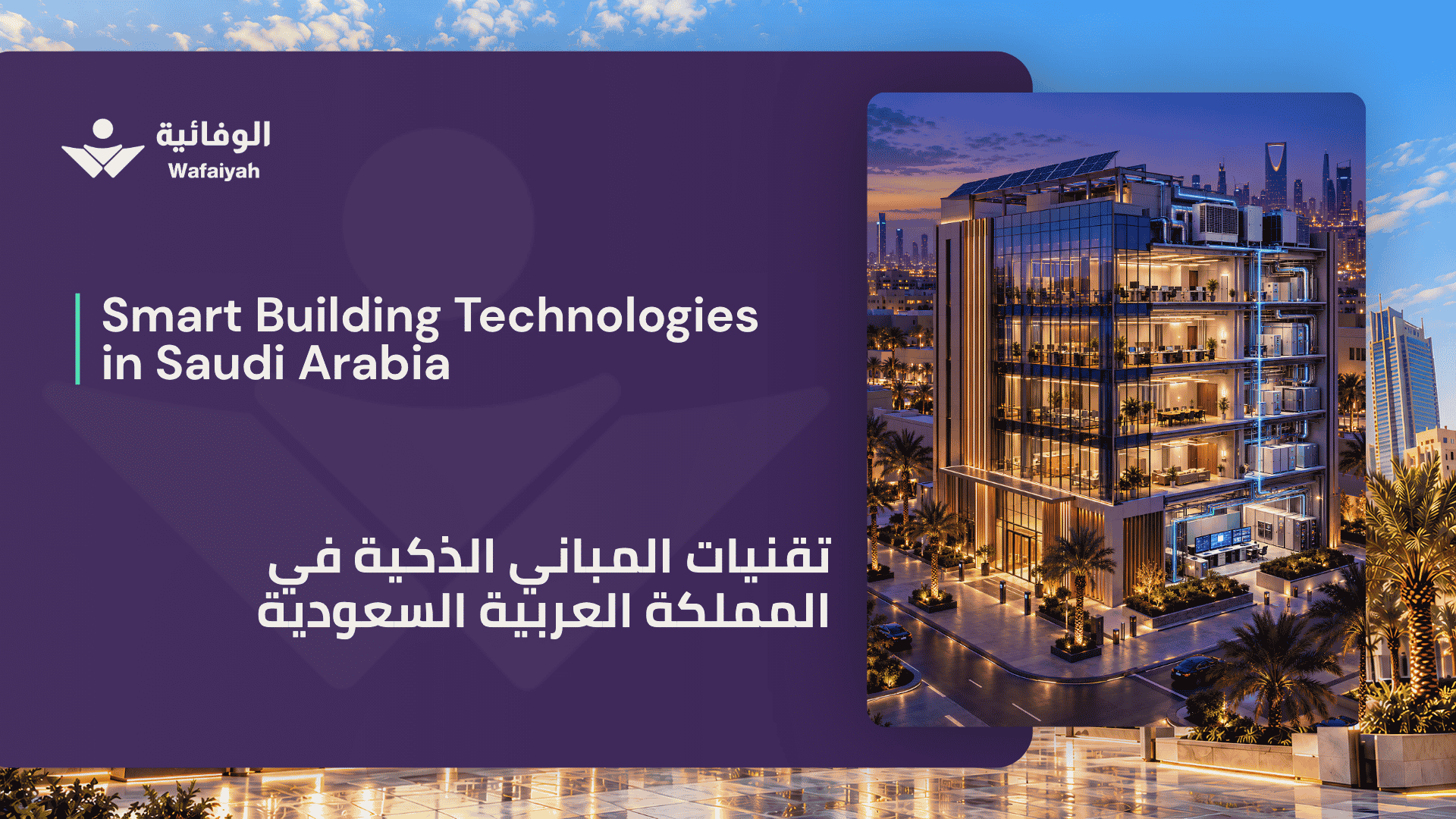
Saudi Arabia’s construction and real estate sector is rapidly evolving, driven by Vision 2030’s focus on smarter, more sustainable, technology-enabled infrastructure. Smart buildings use connected technologies to monitor, automate, and optimize systems such as lighting, cooling, security, and energy use. This is especially important in Saudi Arabia, where high temperatures create significant cooling and energy demands. Wafaiyah supports this transformation as an integrated construction and MEP contractor delivering modern infrastructure projects.
Why Smart Building Technologies Matter in Saudi Arabia?
Smart building technologies are gaining huge popularity in Saudi Arabia, where the focus is on creating modern cities and sustainable infrastructure. These technologies involve connected buildings, sensors, automation, and information to run buildings in a more effective way. They are able to regulate the lighting, air conditioning, security, and energy consumption according to real-time requirements.
Smart solutions are particularly useful in Saudi Arabia as structures usually need a lot of cooling as a result of the hot weather. These solutions will help minimize energy usage, enhance comfort, enhance security, and decrease operational expenses. They also promote the Vision 2030 objectives of Saudi Arabia by promoting sustainability, digitalization, resource efficiency, and building smarter and more connected communities.
Key Smart Building Technologies in Saudi Arabia
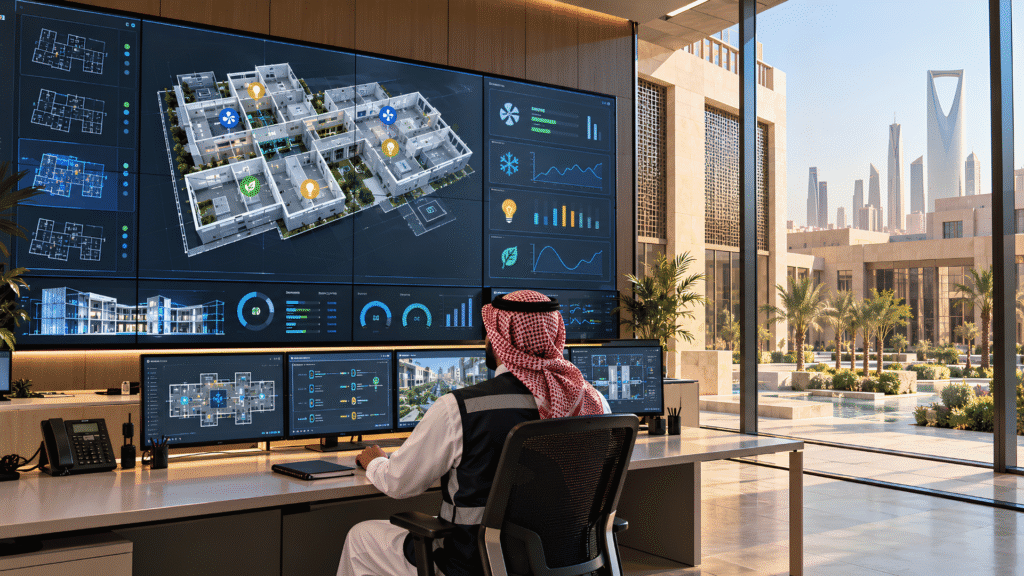
Building Management Systems
Building Management Systems (BMS) integrate and manage key building activities through a single platform. They are able to track air conditioning, lighting, ventilation, and other devices. In Saudi Arabia, BMS will assist facility managers in addressing issues in a timely manner, enhance energy efficiency, and ensure a comfortable indoor environment despite the extreme outside temperatures.
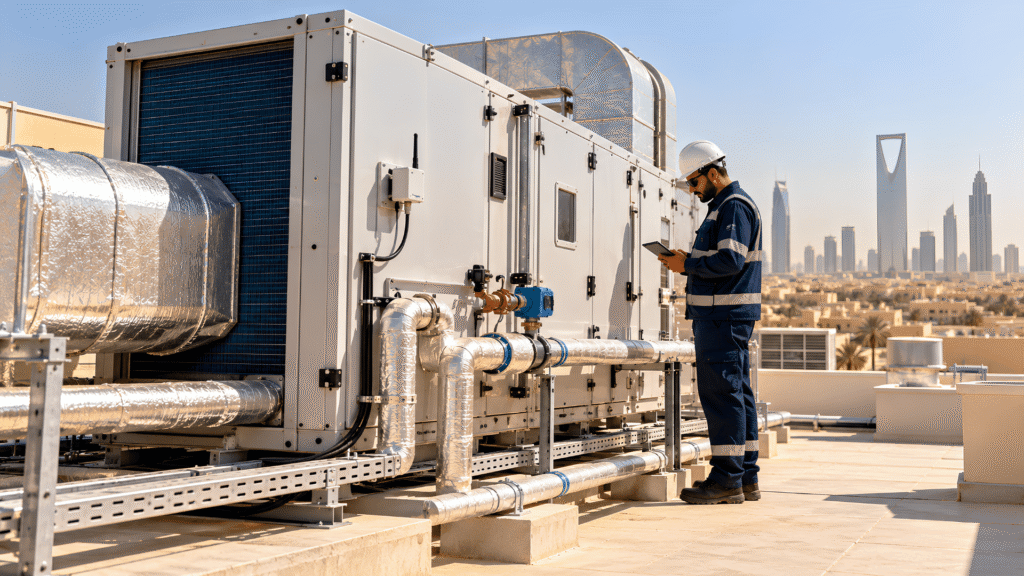
Smart HVAC Systems
Smart HVAC systems involve sensors, automation, and real-time data that are used to control heating, ventilation, and air conditioning. As cooling is a necessity in Saudi Arabia, these systems are able to regulate temperatures depending on occupancy and weather. This will minimize wastefulness of energy use and allow occupants to be comfortable indoors.
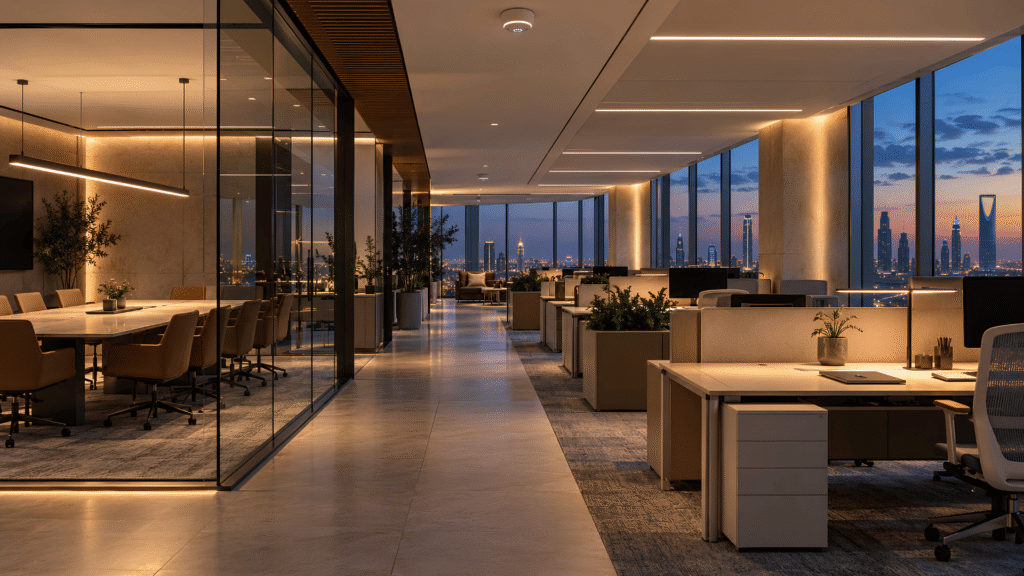
Smart Lighting
Smart lighting systems will automatically change the lights based on occupancy, daylight, and user preference. Light sensors can be used to turn the lights off in unused rooms, and automatic sensors can be used to dim the light where there is a natural light supply. These characteristics assist Saudi buildings to conserve energy, cut operating expenses, and meet sustainability objectives.
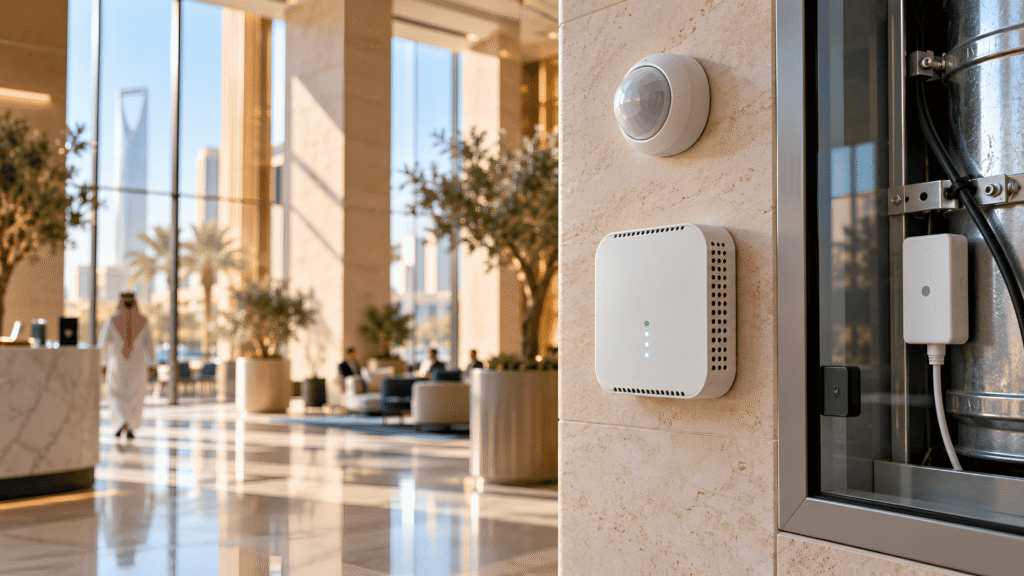
IoT Sensors and Devices
IoT sensors provide real-time temperature, occupancy, air quality, energy consumption, and equipment performance information. This information can be shared by connected devices with building management platforms. These insights can guide Saudi Arabian buildings to recognize areas of inefficiency, enhance maintenance, and design safer, more comfortable areas to use.
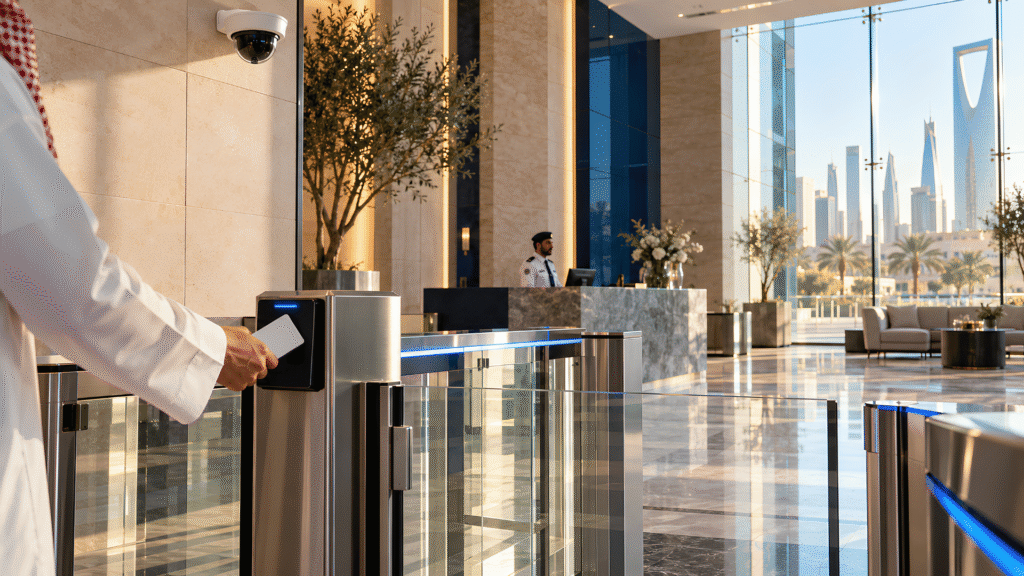
Smart Security Systems
It involves smart security technologies that integrate cameras, access control systems, alarms, sensors, and monitoring software. Such systems are able to detect abnormal activity and give real-time information to the managers of the building. Smart security, in Saudi Arabia, can enhance the security of offices, hotels, residential buildings, hospitals, shopping centers, and large public facilities.
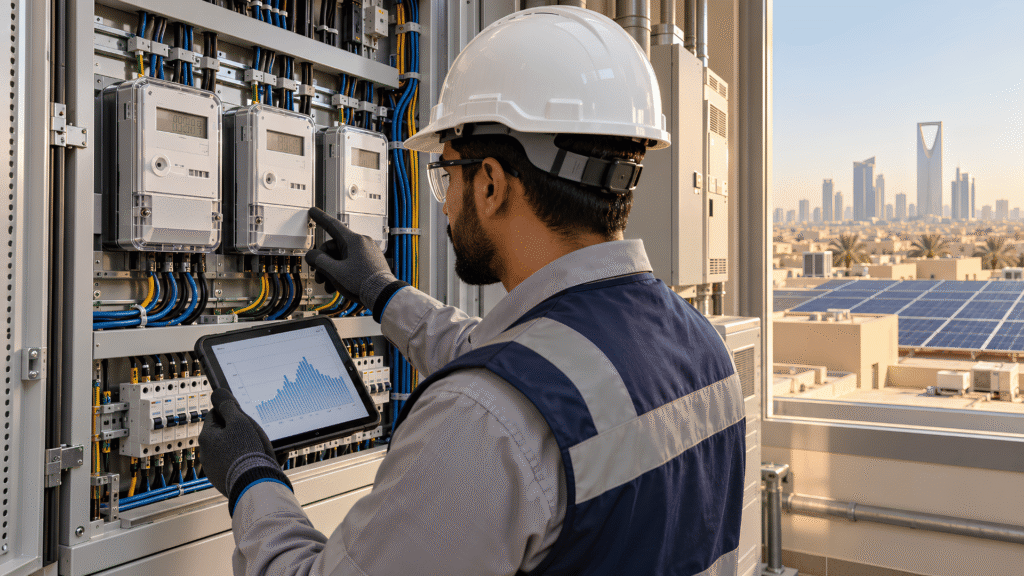
Energy Management Systems
Energy management systems track the use of electricity and where energy can be conserved. They are able to automatically operate equipment when it is in high demand or when there is low occupancy. In the case of Saudi buildings, these systems can be used to deal with high cooling loads, minimizing energy waste, managing costs, and promoting environmental goals.
Important Benefits of Smart Building Technologies
Lower Energy Consumption
Smart technologies also assist buildings in consuming energy when required. Unnecessary consumption can be alleviated through automated cooling, lighting, and equipment controls. This advantage is especially valuable in Saudi Arabia, where air conditioning may take up a large portion of the building’s energy consumption in hot seasons.
Improved Comfort
Smart buildings will be capable of constantly checking the temperature, humidity, lighting, and air quality within the building. Automated systems then modify conditions to suit occupants and building activity. This will provide more comfortable indoor facilities to employees, residents, visitors, and customers and minimize the demand on manual changes by facility staff at any given time.
Enhanced Level of Safety
Smart access controls, sensors, and alarms, along with connected cameras, offer more powerful monitoring within a building. These technologies are able to quickly identify any unauthorized access, suspicious activity, smoke, or equipment issues. Consequently, building operators will be able to react more quickly to possible risks and offer safer conditions to inhabitants and visitors.
Reduced Maintenance Costs
Smart systems will be able to track equipment functionality and detect possible failures. This will enable maintenance teams to solve the issues before they turn out to be costly failures. Predictive maintenance is also capable of minimizing downtime, increasing equipment lifespan, and assisting Saudi building owners to better control their operational expenses in the long run.
Applications of Smart Building Technology in Saudi Arabia
The use of smart building technology is common in most industries in Saudi Arabia, such as residential communities, offices, hotels, hospitals, shopping malls, universities, airports, and government buildings. Smart systems have the ability to turn lights on and off, regulate cooling, security, and power use in homes and offices. Automation can help a hotel enhance the comfort of its guests and efficiently manage rooms.
Hospitals are able to track indoor environments, equipment, and vital facilities. Malls can streamline lighting, air conditioning, security, and people flow. Connected systems can be used to control many buildings on centralized platforms by large developments. These applications help in facilitating energy efficiency, operational performance, safety, comfort, and overall development of smart and sustainable communities in Saudi Arabia.
Challenges of Implementing Smart Buildings in Saudi Arabia
The introduction of smart building technologies into Saudi Arabia can have a number of challenges. The high start-up cost might be due to the sensors installed on the buildings, the equipment they are linked to, software, networks, and advanced professionals. It is also possible that older buildings need upgrades for smart systems to be used effectively. When the equipment of different manufacturers has incompatible technologies, integration may become challenging.
Cybersecurity and data privacy are other issues since connected buildings gather and distribute a lot of data. Employees might also be required to be trained to use and maintain advanced systems. Stable internet connection, system maintenance, and technical support are significant for long-term performance. These challenges can be overcome by careful planning, appropriate choice of technology, competent teams, and good security.
Conclusion
Ready to transform your building with intelligent, efficient, and future-ready systems? Partner with Wafaiyah for integrated MEP, HVAC, electrical, construction, and technical maintenance solutions designed around your project’s needs. From smart infrastructure and automation to reliable long-term support, our experienced team helps turn modern building technology into measurable operational value across Saudi Arabia.
Frequently Asked Questions
Why are smart buildings important in Saudi Arabia?
Smart buildings help in handling high cooling loads, enhancing energy efficiency, as well as contributing to the sustainable development of infrastructure in Saudi Arabia.
What is a Building Management System?
A Building Management System is a centralized monitoring and control system for building equipment like HVAC, lighting systems, electrical systems, and alarm systems, among other facilities.
How does IoT improve smart buildings?
IoT links devices and gadgets, allowing real-time data gathering regarding occupancy, temperature, energy usage, air quality, equipment functionality, and water usage.
How does smart HVAC save energy?
Smart HVAC systems automatically adjust cooling according to occupancy, temperature, schedules, and operating conditions, reducing unnecessary energy consumption and improving comfort.