

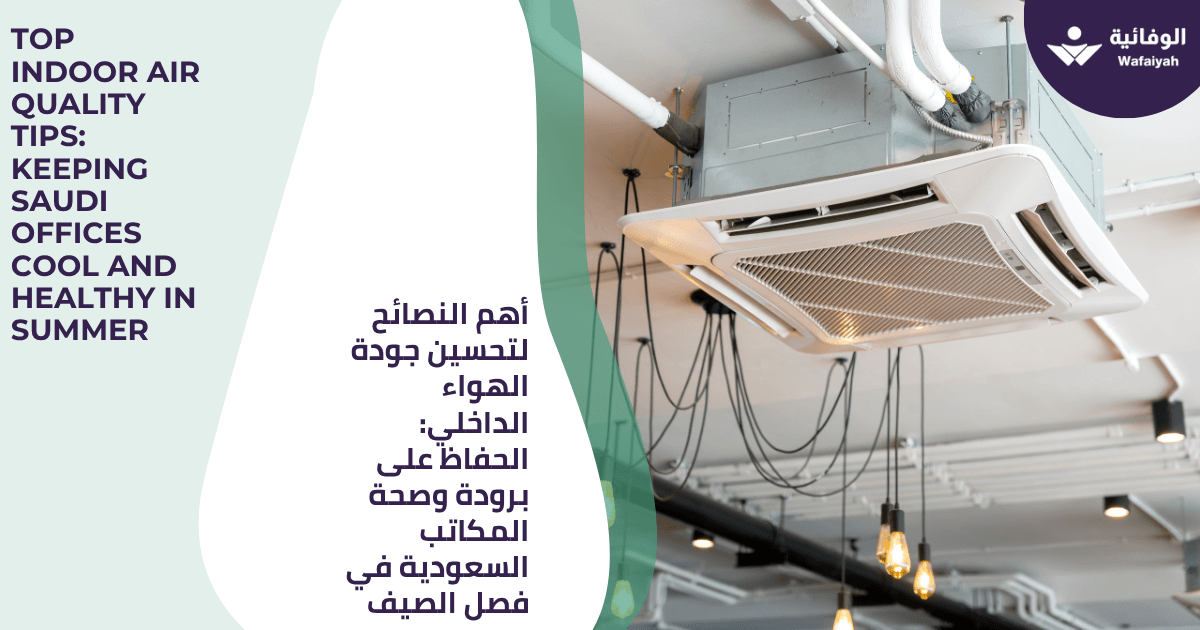
Indoor Air Quality (IAQ) in summer in Saudi Arabia brings extreme heat and high humidity, creating significant challenges for office environments. Maintaining a comfortable workspace is essential not only for employee health but also for productivity and overall well-being. At Wafaiyah, we understand the critical link between efficient cooling systems and indoor air quality, ensuring workplaces remain safe, comfortable, and conducive to performance, even under the harshest climatic conditions.
The Indoor Air Quality (IAQ) has a direct effect on the health, comfort, and productivity of the employees. Proper ventilation, humidity and frequent filtration will prevent the build-up of pollutants, allergens and harmful particles. IAQ solutions are beneficial in improving health and reducing absenteeism, as well as improving concentration, which makes the workplace healthier and more welcoming.
Pure and clean air promotes employee welfare and productivity. Regulation and control of indoor air quality is vital in contemporary offices, both for long-term well-being and to demonstrate corporate care about the health and safety of the staff in any working place.
Efficient Cooling Strategies for Saudi Offices in Summer
Optimizing HVAC Systems
Timely maintenance of the HVAC system will be efficient in providing a cooling environment in the summer. Consumption of energy is reduced by washing filters, inspecting refrigerators, and regular inspections to ensure comfort. The correct calibration is a balance between cooling and operating expenses, which provides productive spaces even under the highest temperature conditions.
Use of Zoned Cooling
Make use of zoned cooling to give office areas the required temperature. The high-occupancy or heat-intensive areas are efficiently cooled, and low-use areas conserve energy. This would cut down on waste, utility bills and ensure that employees are comfortable. Zoned cooling makes the working conditions in the office consistent and productive all the time, particularly when the weather is hot and humid.
Install Window Treatments for High Performance
Reflective shades, blinds and thermal curtains prevent the intense sunlight, which increases heat gain in an indoor space. Shading the sun maintains the temperatures, reduces the power consumed by air conditioning, and minimizes glare to workstations. Correctly installed window treatments enhance the comfort of the employees and save on energy, thus making the office cooler and more sustainable during Saudi summers.
Promote Airflow Management
Good circulation will spread the cool air and eliminate hot spots. HVAC systems are supported by using ceiling fans, circulation fans, and open layouts, which enhance comfort and reduce energy consumption. Well-maintained airways provide maximum cooling performance to let office areas stay comfortable even in extreme weather conditions.
Adopt Energy-Saving Equipment
Current air conditioners and chillers are modern and consume less electricity to ensure comfort. Smart systems automatically regulate cooling according to occupancy, temperature and humidity. The high-efficiency equipment investment reduces energy expenses and carbon footprint. It will offer sustainable cooling and help employees to stay comfortable during the long and hot Saudi summers.
Quick Tips for Maintaining Clean Air in Offices
Regular Filter Replacement
Dust, pollen and air pollution are filtered by replacing the air filters. Frequent replacement keeps the system efficient and avoids any kind of build-up. Hence, proper maintenance protects the respiratory health of employees, provides cleaner indoor air, and increases the life of HVAC systems. A productive, comfortable, and safe office must have clean filters.
Control of Humidity Levels
Humidity levels of 40-60 percent would stop mould and reduce airborne viruses. Maintaining a healthy and comfortable work environment all year long is possible through balanced humidity. They also help to preserve furniture and electronics and keep employees healthy and productive.
Reduce Chemical Pollutants
Restrict the use of harsh cleaning chemicals, aerosols, and strong paints. To minimize toxins in the air, use products with low VOC or with low environmental impact. This protects the health of employees, lessens irritation, offers a safer working place and helps in promoting sustainable practices in the workplace.
Promote Inappropriate Ventilation
Open windows with HVAC systems introduce fresh air outside. Ventilation helps to eliminate stale air, dilutes pollutants, and ensures the oxygen level. Regular air circulation also improves comfort and well-being, letting the employees concentrate on their work much better.
Maintenance of Office Plants
The indoor air quality plants help to purify the air by taking in the toxins and giving out oxygen. Plant life that is well placed enhances beauty, alleviates stress and leads to clean and healthier air. Hence, plants promote physical and psychological well-being and provide a more natural and welcoming environment.
Measure and Monitor the Air Quality
Air quality sensors identify the sources of pollution and enable timely responses. Live data will allow carrying out proactive cleaning, maintenance, and HVAC changes. Monitoring always guarantees healthy air and keeps the office IAQ efficiently and reliably.
Smart Monitoring & Technology for Indoor Air Quality
Smart technology enhances indoor air quality by tracking the number of pollutants, humidity, and CO2 in real-time. A modern sensor system is monitored and activated to make automatic ventilation, filtration, or heating. Smart systems increase air circulation, ensure comfort, and eliminate the accumulation of contaminants.
The use of IAQ technology helps in sustainability, energy efficiency and employee welfare. Hence, the use of smart indoor air quality tools in offices will make them safer, healthier places to work and stay more productive. Automation provides a steady level of monitoring and proactive maintenance, eliminating the risks and continually improving the quality of indoor air.
Following Daily Office Practices for Healthy Indoor Air Quality
Schedule Routine Cleaning
Daily dusting, vacuuming and cleaning of surfaces reduces all kinds of allergens and airborne particles. Regular cleaning avoids accumulation and contributes to fresh working environments. Hygiene will enhance comfort as well as the health of the employees, in addition to rising productivity and a clean, welcoming office atmosphere.
Encouraging Employee Hygiene
Encourage handwashing, good respiratory etiquette and cough or sneeze covering to reduce the spread of germs. Harmless routines can minimize contamination, create a healthy working environment, and avoid sick leave cases. This encourages a responsible office culture concerned with the well-being of the staff.
Clean-up Personal Workspace
Well-maintained desks ensure the removal of dust, and cleaning is easier. Reducing clutter will make sure airflow is balanced, which will promote the work of the HVAC. A clean work environment boosts concentration, reduces allergens and adds to the general IAQ and appearance of a professional office.
Regular HVAC Checks
HVAC systems are efficient with the help of daily or weekly checks of vents and filters. The timely solution helps to avoid the deterioration of air quality, ensure airflow stability, and increase comfort. Periodical inspections also prolong the life of the system and safeguard the well-being of the employees in crowded offices.
Minimizing Indoor Smoking and Odors
Implement no-smoking policies and regulate strong odours of fragrances or food. Minimizing sources of odors ensures clean and breathable air. It also enhances comfort and helps employees to be focused as well as show dedication to a professional working environment.
Encourage Natural Ventilation
When the weather is favorable, windows or doors should be opened to get fresh air and to help dilute pollutants indoors. Mechanical systems are supplemented by natural airflow, which enhances the quality of air, oxygen circulation, and employee well-being, making it a simple, effective daily health practice in healthy offices.
Maintaining healthy indoor air quality (IAQ) is essential for employee comfort and productivity. Wafaiyah emphasizes actionable steps: clean air, proper cooling, humidity control, and smart monitoring. Combining smart technologies with consistent daily habits ensures optimal results, fostering a healthier, more productive, and comfortable work environment.
Frequently Asked Questions
How can I keep the office air cool without high electricity bills?
Use energy-efficient AC, ceiling fans, shading, and smart thermostats to optimize cooling.
What’s the ideal indoor temperature for Saudi offices in summer?
Around 22–25°C is comfortable while reducing AC energy consumption.
How often should office AC filters be cleaned?
Every 2–3 months, or more often during dusty summer months.
Can indoor plants improve air quality in offices?
Yes, certain plants like snake plants and peace lilies can reduce VOCs and improve oxygen levels.