


A practical guide for facility managers and building engineers in Saudi Arabia
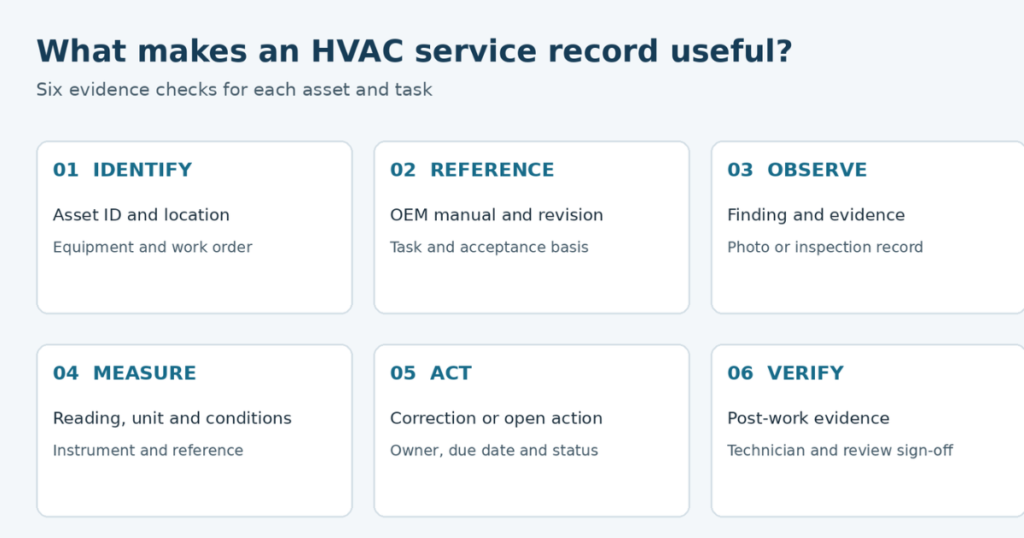
A commercial HVAC maintenance checklist should identify the equipment, reference the correct procedure and show what was found and completed. A tick against “filter checked” does not identify the unit, its condition or the action taken. Link every task to an asset record, findings, relevant readings, corrective actions and sign-off.
For a Riyadh office or commercial building, use the checklist as a service evidence record rather than a universal repair instruction. Equipment manuals and the approved maintenance plan determine the applicable tasks and acceptance criteria. Building users can report symptoms; qualified personnel perform technical inspection, measurements and repairs. This guide explains how to record and review that work.
Build an HVAC Asset Record
Give each unit a unique asset ID and connect it to its physical location. Record the equipment type, manufacturer, model and serial number. Include the floor or zone served, associated controls and available installation or commissioning records. A room thermostat and an air-handling unit may need separate identities even when they belong to the same system.
Attach the applicable original equipment manufacturer (OEM) manual and record its document number, revision and task reference. Confirm that the manual applies to the actual equipment and installed options. Keep the service history, known defects and replacement records linked to that asset. Do not copy a procedure from a similar-looking unit without technical verification.
| Field | Record to Maintain |
|---|---|
| Identity | Asset ID; type; make; model; serial number |
| Location and service | Building; floor; zone served; associated controls |
| Technical reference | Applicable OEM document; revision; task or section |
| Maintenance basis | Approved task plan; frequency basis; next due date |
| History | Previous work orders; defects; changes; relevant warranties |
If a label is missing, assign a provisional register ID and ask the engineering team to verify identity. Record uncertainty rather than invent a model or specification. Reconcile asset changes when equipment is replaced, moved or removed.
Separate Observations From Technician Tasks
Building users should record what they notice, where it occurs and when it started. Useful observations include uneven comfort, visible water, unusual sounds, a displayed alarm or a blocked room vent. Describe symptoms without claiming a diagnosis. An occupied room feeling warm does not establish a refrigerant leak.
Equipment access, electrical inspection, refrigerant work, internal cleaning and moving-component checks belong to qualified personnel following the applicable procedures and site safety arrangements. Facility staff should not open panels, touch wiring or enter restricted plant areas merely to complete this checklist. Follow the site’s escalation process for urgent conditions.
| Component | User Observation | Qualified Task and Evidence |
|---|---|---|
| Filters and airflow | Report weak airflow or visible vent obstruction | Inspect filter condition and fit; record action and applicable findings |
| Coils and drainage | Report visible leakage or affected room location | Inspect and service relevant components; record condition and verification |
| Controls | Record displayed alarm or comfort complaint | Check applicable control operation; record settings and results |
| Electrical and moving parts | Report unusual sound or visible damage from a safe position | Inspect under approved procedures; record findings and necessary work |
| Refrigerant circuit | Report reduced cooling; do not infer charge condition | Diagnose as applicable; document findings and authorised action |
Apply the Checklist to Each Asset
Select tasks for the equipment actually installed. An air-handling unit, fan-coil unit and chiller do not share every maintenance activity. Mark a task Not Applicable only with a reason. Set task frequencies from applicable manuals, operating conditions, asset condition and relevant requirements, with qualified technical review.
Filters and Air Distribution
Record filter type, observed condition, fit and the action taken. Where the service plan requires a pressure-drop measurement, record the reading and applicable reference. A replacement entry should identify the specified product or part reference. Inspect duct cleanliness where required; define cleaning scope from assessment rather than automatically adding full duct cleaning to every visit.
Coils and Condensate Drainage
Record observed contamination, damage or drainage issues and identify the area inspected. If cleaning or corrective work is performed, describe it and record the relevant post-work check. Separate a photograph of an accessible surface from evidence that the entire component has been serviced. Any inaccessible section should remain a stated limitation.
Controls and Electrical Components
List the controls or devices checked and the test reference. Record applicable settings, alarms and results. Electrical inspection and testing require competent personnel and the site’s approved safety arrangements. A generic “electrical OK” entry is insufficient when the task requires specified inspection or measurement evidence.
Fans Motors and Refrigerant Systems
Identify component-specific inspection and lubrication requirements; some components do not require routine lubrication. Use the appropriate equipment and motor instructions. Trane air-handler guidance illustrates how operating conditions can affect motor inspection frequency. Refrigerant assessment is equipment-specific: do not use the checklist to prescribe routine topping-up or diagnose charge from one symptom.
Record Readings With Their Context
A number needs a unit, measurement point and operating context. Record the instrument identifier and relevant verification or calibration status. Include the date, equipment operating state and conditions that affect interpretation. Use the OEM or approved engineering reference for acceptance; do not apply one generic temperature difference or pressure limit to every unit.
Where appropriate, record before-and-after measurements under comparable conditions. A reading taken while a system is stopped may not be comparable with one taken under operating load. If the conditions differ, explain the difference. Record Not Measured with a reason rather than substituting a guess or marking an unperformed test as passed.

Turn Findings Into Corrective Actions
Connect each defect to an action record. Name the responsible person, approval requirement and due date. Separate work completed during the visit from repairs awaiting parts, access or authorisation. Include interim restrictions where relevant and have them reviewed by the authorised technical team.
| Record Field | Required Entry |
|---|---|
| Work identification | Work-order ID; asset ID; location; date and time |
| Reference | OEM document and revision; task reference; acceptance basis |
| Finding | Observed condition; relevant photograph or evidence ID |
| Readings | Value and unit; measurement point; operating conditions; instrument ID |
| Action | Work completed; parts used; related corrective order |
| Status | Completed; defect identified; deferred; not applicable; awaiting action |
| Follow-up | Reason; owner; approval requirement; due date |
| Verification and sign-off | Post-work result; technician; reviewer where required; date |
Signing for attendance does not prove that every task was completed. The task record should state its status and any limitations explicitly. Keep outstanding actions visible until verification supports closure. General maintenance guidance from the US Department of Energy supports defined roles and performance evidence; it is not a Saudi regulatory checklist.
Worked Riyadh Service Record
Illustrative example: asset AHU-RYD-03 serves a second-floor office zone. The technician records an incorrectly seated filter and links a photograph to the work order. The applicable equipment manual and filter specification are checked before the corrective action. These are fictional record identifiers, not an actual Wafaiyah project.
After correcting the installation under the approved procedure, the technician records the product reference and post-work inspection result. If a measurement is required, its value, unit, instrument and acceptance reference are entered from the actual work. No invented reading or OEM limit is supplied in this example. A separate damaged seal awaiting replacement remains an open action with an owner and due date.
Review Evidence and Sign Off
Before accepting the visit record, check asset identity, task references and whether findings match the stated actions. Confirm that required readings are present and supported by the appropriate acceptance basis. Look for repeated identical comments, unexplained missing measurements and tasks marked complete despite unresolved limitations.
Distinguish the technician’s completion statement from the reviewer’s acceptance. A reviewer may accept the documented visit while leaving a corrective order open; the record must show both facts. Request the next service date, remaining actions and updated history. Photographs support the record but cannot alone establish performance or prove every internal task was completed.
Discuss HVAC Maintenance With Wafaiyah
Wafaiyah publishes HVAC inspection, maintenance, repair and optimisation services. Share your asset register, available manuals and required service evidence to request an equipment-specific proposal. Ask the team to confirm task coverage, report fields, parts responsibilities and review arrangements in writing before appointment.
Frequently Asked Questions
What If an HVAC Asset Has No Identification Label?
Use a provisional register identifier tied to the location and photographs, then ask the engineering team to verify the equipment identity. Do not invent a model, capacity or serial number. Mark missing information clearly. Once verified, link the confirmed identity and applicable manual to earlier records so the service history remains traceable.
Can a Task Be Signed Off When the Reading Is Missing?
That depends on whether the approved task requires the reading. If it does, record the omission and its reason; do not mark the measurement as passed. The authorised reviewer should determine the next action. A completed visual inspection can be recorded separately from a measurement awaiting access, suitable conditions or the appropriate instrument.
Does a Photograph Prove That Servicing Is Complete?
A photograph can support asset identification or show a visible condition and corrective action. It does not alone establish performance, internal component condition or completion of every task. Link it to the relevant work record and combine it with required findings, readings, test references and sign-off. State any inaccessible areas or other inspection limitations.
What Should Not Applicable Mean on a Checklist?
It means the task does not apply to the identified equipment or configuration, with the reason recorded. It should not be used for unavailable access, missing tools or unfinished work. Those situations need their own status and follow-up action. A qualified reviewer should confirm unclear applicability against the equipment information and approved maintenance plan.
How Should a Deferred Repair Be Recorded?
Keep the defect and related corrective order visible. Record the finding, reason for deferral, approval requirement, responsible party and due date. Identify any approved temporary measures and limitations. Completing the scheduled visit does not close the deferred repair. Update the action when work and verification are completed, retaining its connection to the original finding.
Who Should Accept the Completed Service Record?
The technician records work performed and its results. The contract or site procedure should identify who reviews and accepts the evidence, such as an authorised building engineer or facility representative. Define those roles beforehand. Acceptance of a visit record should not conceal outstanding defects, replace specialist review or imply that every building system has been certified.